AI Stocks Face a Tougher Test as Rising Oil Prices Challenge Market Confidence
Nasdaq futures retreat as financing concerns weigh on AI infrastructure firms, oil approaches five-month highs and investors await major corporate earnings.

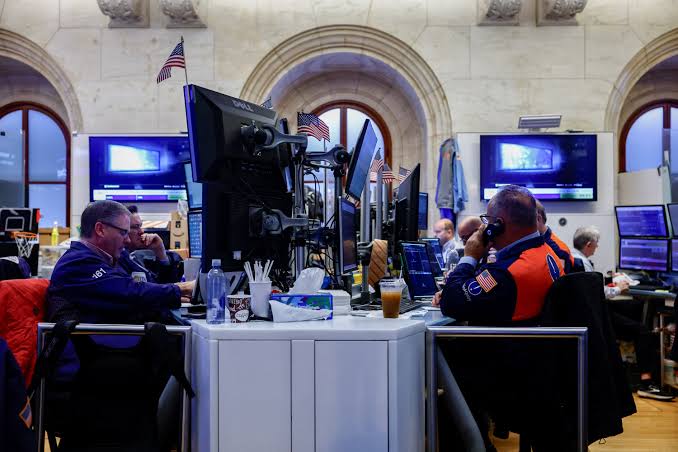
U.S. financial markets entered Tuesday, October 20, with technology stocks facing renewed selling pressure as investors reassessed the cost of artificial intelligence expansion and weighed the potential economic consequences of higher energy prices. The retreat in Nasdaq futures highlighted a market increasingly focused on the financial sustainability of corporate growth rather than the promise of innovation alone.
Nasdaq 100 futures fell 0.5% in early trading, while S&P 500 futures slipped 0.09%. Dow Jones futures moved in the opposite direction, rising 0.22%, suggesting that investor caution was concentrated more heavily in technology-related shares than across the entire market. CoreWeave lost 3.1% in premarket trading, Nebius Group declined 2.9%, Apple dropped 1%, and Nvidia edged lower.
The movements followed a modest recovery on Monday, when the S&P 500 and Nasdaq advanced as investors returned to technology shares after a sharp selloff the previous week. That rebound, however, did little to resolve concerns about the capital required to build and operate the infrastructure underpinning the AI industry.
AI Infrastructure Faces a Financial Credibility Test
The central issue confronting the sector is the relationship between investment spending, financing costs and future revenue. Building AI infrastructure requires substantial capital for computing equipment, data centers, electricity and supporting systems. Companies pursuing rapid expansion must demonstrate that anticipated demand can translate into reliable cash generation without allowing borrowing costs to undermine their business models.
CoreWeave and Nebius have become particularly sensitive to this debate because their businesses are closely tied to the computing capacity required by AI developers. Their share-price declines reflect a broader reassessment of infrastructure companies whose growth ambitions depend on continued access to capital and sustained demand from technology customers.
The challenge is not necessarily a rejection of artificial intelligence as a commercial opportunity. Rather, investors are becoming more selective about which companies can convert technological demand into durable financial returns. Businesses with strong customer commitments, disciplined capital allocation and credible paths toward profitability may be better positioned than those relying on increasingly expensive financing to support expansion.
This distinction could reshape competitive conditions across the AI ecosystem. Access to funding, infrastructure utilization and the ability to secure long-term commercial contracts may become as important to corporate valuations as technological capabilities.
Elice Group's Market Debut Adds to Investor Caution
Pressure on AI-related valuations was also evident in South Korea, where Elice Group's shares fell nearly 30% during their market debut, trading below the initial public offering price. The company had raised 201.1 billion won, equivalent to approximately $151.12 million, in its offering.
The performance offers a warning for companies seeking public-market funding during a period of heightened scrutiny. Investor demand for AI exposure does not automatically translate into support for every business associated with the technology. Valuation, financing requirements, competitive positioning and the visibility of future earnings can determine whether an offering attracts sustained buying interest.
For companies planning listings or additional fundraising, market conditions may require more detailed disclosure of capital expenditure, customer concentration, expected revenue growth and the timetable for achieving profitability. A strong technological proposition remains important, but it may not be sufficient without a convincing financial case.
Oil Prices Introduce a Broader Economic Risk
Energy markets added another source of uncertainty. Brent crude rose 1.7% to approximately $111 a barrel, approaching a five-month high as traders priced in geopolitical risks associated with Houthi attacks on Saudi infrastructure and reports of vessel attacks in the Gulf.
Higher oil prices can affect corporate performance through several channels. Transportation, manufacturing and logistics businesses may face rising operating expenses, while energy-intensive data centers could encounter additional electricity-related costs. Companies unable to pass these increases on to customers may experience pressure on margins.
The wider economic consequences also matter for financial markets. A sustained increase in energy prices could complicate the inflation outlook, limit the scope for monetary easing and place pressure on borrowing costs. Such a combination would be particularly challenging for companies whose valuations depend on expectations of strong earnings growth in the years ahead.
For technology businesses, the connection between energy and competitiveness is becoming more significant. AI infrastructure requires substantial and dependable electricity supplies, making power availability, energy contracts and operating efficiency important elements of long-term investment planning.
Earnings Season Shifts Attention Toward Execution
Investors are now looking to corporate results for evidence that companies can sustain growth despite financing pressures and geopolitical uncertainty. SpaceX and Netflix are scheduled to report quarterly results after Tuesday's market close, followed by Meta Platforms and Tesla on Wednesday. Their disclosures could influence expectations for technology spending, advertising, consumer demand and the commercial development of AI-related services.
Industrial earnings are also providing important signals. Steel Dynamics shares fell 6.3% after the steelmaker missed third-quarter profit estimates. The reaction illustrates how disappointing results can quickly alter market assessments when investors are sensitive to costs and earnings quality.
By contrast, 3M shares rose 3.9% after the industrial company announced an expanded commercial relationship with Amazon and issued a warrant giving an Amazon subsidiary the right to purchase more than $521 million worth of 3M common stock. The agreement demonstrates how commercial partnerships can create strategic opportunities while linking companies through longer-term business and financial arrangements.
These contrasting performances underline the importance of company-specific execution. Strong partnerships, improving profitability and credible forecasts can support valuations, while missed earnings and uncertain financing requirements can weaken investor confidence even when a company's long-term market remains attractive.
A More Selective Market May Define the Next Phase
The immediate direction of U.S. equities will depend partly on whether upcoming earnings justify current valuations and demonstrate that major technology companies can continue funding their strategic priorities. Investors will also assess whether higher oil prices remain a temporary geopolitical response or develop into a more persistent source of inflationary pressure.
For the AI industry, the emerging test is increasingly commercial rather than purely technological. Companies will need to show that infrastructure investments generate sufficient demand, that expansion can be financed on sustainable terms and that operating costs remain manageable as computing requirements grow.
For the broader market, the combination of energy volatility, capital-intensive technology spending and uneven corporate results suggests that performance may become more differentiated across sectors and individual businesses. The companies most likely to retain investor confidence will be those that combine credible growth prospects with financial discipline, transparent reporting and a clear route from investment to earnings.
News You Should See
P&G Raises Fiscal 2027 Cost Warning as Oil and Freight Expenses Threaten Profits
Chemical Tank Leak in Toledo Triggers Evacuations and Industrial Disruptions
Judge Sets December 11 Deadline for Trump Deposition in BBC Defamation Case
Iowa Senate Race Tests How Far Republicans Can Separate Themselves From Trump
California State Workers Strike Over Pay, Healthcare and Return-to-Office Rules
Streaming’s October Showdown: How Disney, Netflix and Major Entertainment Brands Compete for Audiences
Latest News
Procter & Gamble expects commodity, energy and transportation costs to reduce fiscal 2027 profit by $1.4 billion. Quarterly sales rose 4% to $23.28 billion, beating analyst expectations.
A ruptured chemical tank in Toledo, Ohio, prompted evacuations, school closures and an industrial shutdown. Authorities have reduced the restricted zone as the release slows and cleanup preparations continue.
A federal judge has ordered Donald Trump to give a deposition by December 11, 2026, in his $10 billion lawsuit against the BBC, with possible sanctions for noncompliance as the discovery deadline approaches.
Iowa’s 2026 Senate race pits Republican Ashley Hinson, balancing Trump support with economic concerns, against Democrat Josh Turek, who emphasizes bipartisanship amid rising campaign spending.
Thousands of California state workers struck on October 21 over a proposed three-year pay increase, healthcare costs and a four-day office attendance requirement as contract negotiations continued.
October 2026 brings major entertainment releases across Disney+, Netflix, HBO Max, Hulu, Prime Video and Peacock. Explore how familiar franchises, exclusive programming, new music and video games shape competition for streaming audiences.
Saudia advises travelers to book flights through Al Qassim Airport for Riyadh connections, offering free hourly shuttle buses in both directions until further notice.
An AP-NORC poll shows Democratic confidence in accurate vote counting falling to 55%, while Republican confidence rises to 38%, highlighting election integrity concerns ahead of the 2026 US midterms.
Donald Trump campaigns in North Carolina ahead of the November 2026 midterms as low approval ratings, rising fuel costs, Democratic early-voting gains and funding disparities challenge Republican efforts to retain control of Congress.