Election Trust Erodes Ahead of US Midterms as Partisan Divisions Deepen
An AP-NORC poll finds declining Democratic trust in vote counting, rising Republican confidence, and widespread doubts about the Supreme Court’s impartiality ahead of the November 3 midterms.

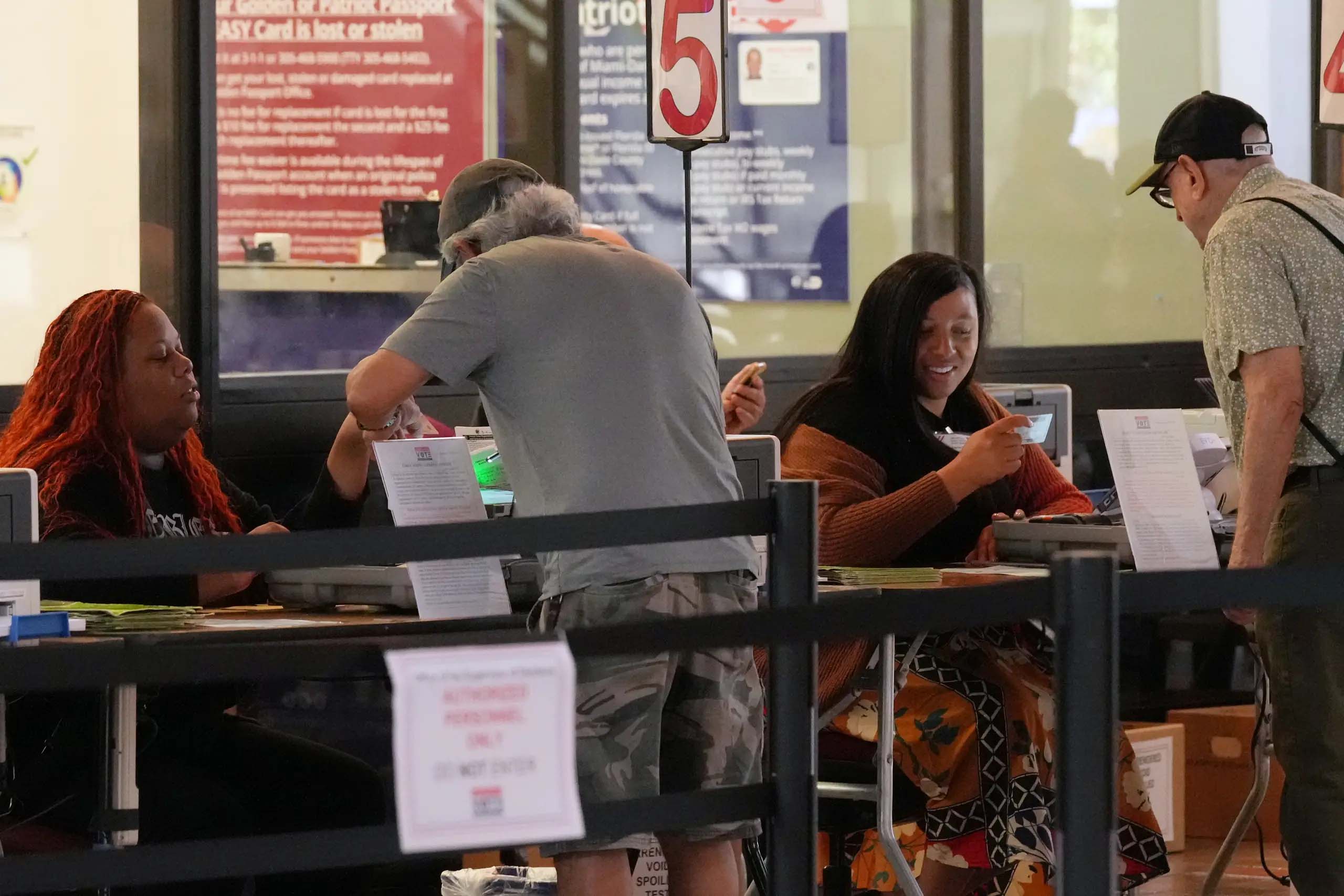
Public confidence in the American electoral system is becoming increasingly divided along party lines, raising fresh questions about how the country will respond to the results of its November 3, 2026, midterm elections. A new survey by The Associated Press-NORC Center for Public Affairs Research points to a significant decline in Democrats' confidence in vote counting, even as Republican confidence has improved since Donald Trump returned to the White House.
The findings reveal a challenge that extends beyond competing campaign messages. When voters disagree not only about candidates and policies but also about whether election outcomes can be trusted, the legitimacy of political institutions becomes a central issue in the electoral contest.
A widening gap in confidence
Among registered Democratic voters, confidence that ballots will be counted accurately has fallen from 75% in 2022 to 55% in 2026. Republican confidence has moved in the opposite direction, rising from 26% to 38% over the same period. Democrats nevertheless remain more confident in the accuracy of election results than Republicans.
Across the electorate as a whole, 45% of registered voters said they had a great deal or quite a bit of confidence that votes would be counted accurately, down from 50% in 2022. Independent voters remained comparatively skeptical, with 34% expressing that level of confidence in both years.
The figures suggest that confidence in the electoral system is not moving uniformly. Political affiliation increasingly shapes how voters interpret the same institutions, procedures and potential risks. That divergence could complicate efforts to establish broad acceptance of the results, particularly in closely contested races.
Presidential influence and competing perceptions of risk
The survey highlights a sharp partisan disagreement over presidential involvement in elections. Approximately nine in ten Democratic voters consider an attempt by the president to influence election outcomes a major problem. Only about two in ten Republican voters share that assessment.
The divide reflects different understandings of what threatens electoral integrity. Democrats are particularly concerned about possible political interference, voter intimidation and efforts to restrict voting methods. Republicans place greater emphasis on concerns about people voting when they are not eligible: roughly seven in ten Republican voters regard this as a major problem, compared with 25% of Democrats.
These concerns have become more prominent as Trump has pursued efforts to expand federal involvement in election administration through executive action and litigation. His administration has also challenged California over alleged noncitizen voting on its voter rolls. Such disputes have intensified arguments over the respective powers of federal authorities, state governments and election officials.
The administration has said it does not plan to deploy the military or immigration agents to patrol polling places, although the possibility of targeted immigration enforcement operations has also entered the debate. Critics have raised concerns about whether visible federal enforcement activity could discourage eligible voters from participating.
The disagreement is therefore not simply about election procedures. It concerns the boundaries of presidential authority, the independence of election administration and the safeguards required to protect participation without weakening legitimate enforcement.
Voting rules remain a source of political competition
The parties also differ over the policies they believe will make elections more secure and accessible. Republican voters strongly favor requirements for photo identification at the polls and proof of citizenship when registering to vote. Democrats are more supportive of same-day registration and policies that send mail ballots to registered voters.
Yet the picture is not entirely divided. A majority of Democratic voters also support voter identification requirements, indicating that some election safeguards attract broader backing than the political debate might suggest.
Artificial intelligence-generated election misinformation, foreign government influence and partisan redistricting are additional concerns shared by majorities across party lines. These issues point to a broader challenge: election credibility depends on more than the mechanics of casting and counting ballots. It also relies on reliable information, transparent administration and public confidence that electoral rules are not being manipulated to advantage one side.
The growing use of digital platforms to distribute political content adds another dimension. False or misleading claims can spread quickly, while competing narratives about election security may reinforce existing partisan suspicions. Public officials, campaigns and media organizations consequently face greater pressure to distinguish documented irregularities from allegations that have not been substantiated.
Limited confidence in the courts adds uncertainty
The judiciary may become especially important if disputed results lead to litigation. However, the survey found that only 17% of registered voters were extremely or very confident that the US Supreme Court would handle a case involving the midterm elections fairly and without partisanship.
That low level of confidence creates a potential institutional problem. Courts are expected to resolve disputes through legal standards rather than political loyalties, but their ability to settle controversies depends partly on whether the public accepts their decisions as legitimate.
If election challenges emerge in closely contested districts or states, judicial rulings could become another focus of partisan disagreement. Even a legally definitive outcome may fail to resolve public suspicion when trust in the institution delivering the judgment is weak.
What the survey means for the midterm elections
The AP-NORC poll was conducted from October 8 to October 12 among 1,119 adults, including 925 registered voters. The margin of sampling error was plus or minus 3.9 percentage points for adults overall and plus or minus 4.2 percentage points for registered voters. These margins are important when interpreting differences in survey estimates, but they do not erase the broader pattern of sharply contrasting partisan perceptions.
The immediate political implications may be felt in campaign messaging, voter mobilization and reactions to close results. Candidates could use election integrity concerns to motivate supporters, while allegations of misconduct may influence whether voters choose to cast ballots in person or by mail. The survey itself does not establish that widespread fraud or interference has occurred; it measures public attitudes and confidence.
For election administrators, the challenge will be to communicate procedures clearly, protect poll workers and voters, and provide timely, verifiable information about ballot processing and results. Transparent procedures and consistent public communication cannot eliminate partisan disagreement, but they can help limit confusion and reduce the space in which unsupported claims gain traction.
For political leaders, the stakes extend beyond winning control of Congress. The way parties and candidates respond to electoral losses, legal challenges and official results may influence confidence in American democratic institutions well beyond November.
The central warning in the findings is that election legitimacy cannot depend solely on whether individual voters believe their preferred side has won. It requires confidence in consistent rules, credible administration and impartial dispute resolution, including when outcomes disappoint. As the midterms approach, rebuilding that shared foundation may prove as consequential for the country's political stability as the results themselves.
News You Should See
P&G Raises Fiscal 2027 Cost Warning as Oil and Freight Expenses Threaten Profits
Chemical Tank Leak in Toledo Triggers Evacuations and Industrial Disruptions
Judge Sets December 11 Deadline for Trump Deposition in BBC Defamation Case
Iowa Senate Race Tests How Far Republicans Can Separate Themselves From Trump
California State Workers Strike Over Pay, Healthcare and Return-to-Office Rules
Streaming’s October Showdown: How Disney, Netflix and Major Entertainment Brands Compete for Audiences
Latest News
Procter & Gamble expects commodity, energy and transportation costs to reduce fiscal 2027 profit by $1.4 billion. Quarterly sales rose 4% to $23.28 billion, beating analyst expectations.
A ruptured chemical tank in Toledo, Ohio, prompted evacuations, school closures and an industrial shutdown. Authorities have reduced the restricted zone as the release slows and cleanup preparations continue.
A federal judge has ordered Donald Trump to give a deposition by December 11, 2026, in his $10 billion lawsuit against the BBC, with possible sanctions for noncompliance as the discovery deadline approaches.
Iowa’s 2026 Senate race pits Republican Ashley Hinson, balancing Trump support with economic concerns, against Democrat Josh Turek, who emphasizes bipartisanship amid rising campaign spending.
Thousands of California state workers struck on October 21 over a proposed three-year pay increase, healthcare costs and a four-day office attendance requirement as contract negotiations continued.
October 2026 brings major entertainment releases across Disney+, Netflix, HBO Max, Hulu, Prime Video and Peacock. Explore how familiar franchises, exclusive programming, new music and video games shape competition for streaming audiences.
Saudia advises travelers to book flights through Al Qassim Airport for Riyadh connections, offering free hourly shuttle buses in both directions until further notice.
An AP-NORC poll shows Democratic confidence in accurate vote counting falling to 55%, while Republican confidence rises to 38%, highlighting election integrity concerns ahead of the 2026 US midterms.
Donald Trump campaigns in North Carolina ahead of the November 2026 midterms as low approval ratings, rising fuel costs, Democratic early-voting gains and funding disparities challenge Republican efforts to retain control of Congress.