Iowa Senate Race Tests How Far Republicans Can Separate Themselves From Trump
Ashley Hinson seeks to maintain Republican support amid economic concerns and policy disputes, while Democrat Josh Turek promotes bipartisanship ahead of the November 3 midterms.

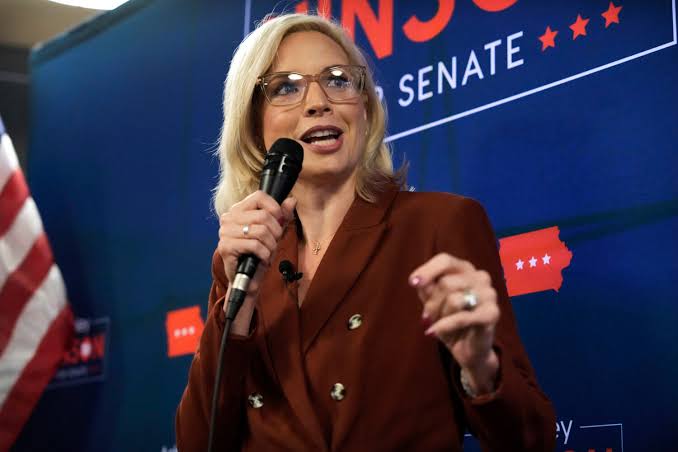
The race for Iowa’s open U.S. Senate seat has become a test of how Republican candidates can maintain the loyalty of Donald Trump’s supporters while responding to voters increasingly concerned about economic pressures and the consequences of federal policy. With the November 3, 2026, midterm elections approaching, Republican nominee Ashley Hinson is attempting to preserve her ties to the president without allowing those ties to define her entire campaign.
Hinson, a member of the U.S. House representing Iowa, entered the Senate contest with Trump’s endorsement and a commitment to be one of his strongest allies in Congress. Her message has since evolved. She now presents herself as a candidate prepared to cooperate with the administration when its policies benefit Iowa while challenging decisions she believes could harm the state.
That adjustment reflects a wider strategic problem for Republicans competing in closely contested races. A presidential endorsement can mobilize loyal voters, provide campaign visibility and strengthen a candidate’s standing within the party. Yet the same association can create political exposure when voters question the administration’s economic record or disagree with its handling of international conflicts.
Economic pressures complicate the Republican message
Iowa’s economic concerns are central to the contest. Manufacturing job losses, the closure of health care clinics and weaker farm profits have contributed to dissatisfaction among some residents. For a state where agriculture and rural communities carry significant economic and political weight, decisions affecting commodity markets, fuel expenses and household budgets can have consequences beyond traditional partisan divisions.
Hinson has publicly opposed Trump’s proposal to increase beef imports as a way to reduce consumer prices, arguing that the approach could disadvantage Iowa’s cattle producers. Her criticism illustrates the difficulty of reconciling a national administration’s efforts to lower prices with the interests of domestic industries that form part of a candidate’s political base.
She has also questioned the administration’s decision to ease sanctions on Russia in exchange for diesel fuel, arguing that Washington should not make concessions that allow authoritarian governments to benefit from international conflicts. On the war with Iran, Hinson has said the financial burden on Americans has become too high and called for the conflict to end promptly, although she did not support a congressional resolution intended to restrict Trump’s authority to continue the war without legislative approval.
These positions allow Hinson to demonstrate some independence while maintaining her broader alignment with the president. The challenge is whether voters view that distinction as meaningful political judgment or as an attempt to distance herself from unpopular decisions without fundamentally breaking with the administration.
Trump’s campaign appearances carry both benefits and risks
Trump’s planned appearance with Hinson at a rally in Sioux City, in conservative northwestern Iowa, is intended to energize Republican voters. He is also scheduled to return to the state on November 1, shortly before Election Day.
The visits offer the Republican campaign an opportunity to mobilize supporters who might otherwise overlook a midterm contest. Presidential appearances can generate media attention, reinforce party identification and encourage turnout among voters who remain personally loyal to Trump.
However, the strategy carries a corresponding risk. By campaigning alongside the president, Hinson strengthens the association that she has increasingly sought to qualify through her emphasis on state interests and bipartisan cooperation. The effectiveness of the visits will depend not simply on the size of rally crowds but on whether enthusiasm translates into ballots and whether less supportive voters become more resistant to the Republican ticket.
Trump’s political standing in Iowa is therefore an important variable in the Senate race. The state backed him by a double-digit margin in the previous presidential election, but past presidential support does not automatically guarantee the same level of participation or enthusiasm in a midterm election.
Turek targets affordability and selective cooperation
Democratic nominee Josh Turek, an Iowa state representative, is seeking to make economic dissatisfaction a central argument against the Republican campaign. He has criticized tariffs and the war with Iran, linking them to higher costs facing Iowa households and businesses.
At the same time, Turek has adopted a position that complicates the usual partisan contrast. His campaign has said he would work with Trump on immigration enforcement, border security and efforts to prevent illegal drugs from entering Iowa. His television advertising explicitly references the president while presenting immigration as an area where cooperation could produce practical results.
This approach allows Turek to argue that bipartisan work does not require agreement with the administration on every issue. It also gives him a way to appeal to voters who support stronger border enforcement but are dissatisfied with economic conditions or other elements of Trump’s agenda.
Republicans have challenged the authenticity of Turek’s moderate positioning, portraying it as an electoral tactic. Nevertheless, his focus on household expenses and selective cooperation gives the Democratic campaign a framework for reaching beyond voters who reliably support the party.
Campaign spending underscores the stakes
The contest has attracted substantial financial investment. Spending on broadcast and cable television advertising has already exceeded $200 million during the current election cycle, according to AdImpact data cited in the reporting. Republicans have spent slightly more supporting Hinson than Democrats have spent supporting Turek.
The scale of spending reflects the Senate seat’s importance to the national balance of power. The position is open because Republican Sen. Joni Ernst is retiring, and the outcome could affect the parties’ ability to control the chamber and advance their legislative priorities.
Iowa’s recent political history adds another dimension. Although Trump carried the state comfortably in the previous presidential election, Democrats continue to view the Senate contest as an opportunity to challenge Republican dominance. The 2020 Senate race, when Democrats spent nearly $30 million more than Republicans in an unsuccessful effort to unseat Ernst, also demonstrates that heavy campaign expenditure does not guarantee victory.
Advertising volume can shape public visibility, but its ultimate value depends on the campaign’s message, the credibility of its candidates and the concerns voters consider most urgent. In Iowa, the interaction between national politics and local economic conditions may prove more decisive than the amount of money each side spends.
The turnout question
Republican activists have expressed concern that conservative voters could become complacent, assuming Trump’s presence and political strength will be enough to protect the party’s congressional majorities. Their concern highlights a familiar midterm problem: voters who participate enthusiastically in presidential elections do not always turn out at the same rate two years later.
For Hinson, the task is twofold. She must encourage Trump supporters to vote while persuading undecided and less enthusiastic Republicans that she can represent Iowa’s interests independently when necessary. For Turek, the opportunity lies in converting economic frustration into participation without alienating voters who remain receptive to cooperation on issues such as immigration.
The outcome will offer an indication of how voters in a traditionally Republican-leaning state evaluate the relationship between party loyalty, presidential leadership and everyday economic performance. It will also provide a measure of whether candidates can build a distinct political identity while campaigning in the shadow of a president whose influence remains substantial but whose policies generate disagreement.
As Election Day approaches, the central strategic question is no longer whether Trump matters to the Iowa race. It is whether his involvement will strengthen Republican turnout more than it reinforces the concerns that Hinson and other candidates are trying to address.
News You Should See
P&G Raises Fiscal 2027 Cost Warning as Oil and Freight Expenses Threaten Profits
Chemical Tank Leak in Toledo Triggers Evacuations and Industrial Disruptions
Judge Sets December 11 Deadline for Trump Deposition in BBC Defamation Case
Iowa Senate Race Tests How Far Republicans Can Separate Themselves From Trump
California State Workers Strike Over Pay, Healthcare and Return-to-Office Rules
Streaming’s October Showdown: How Disney, Netflix and Major Entertainment Brands Compete for Audiences
Latest News
Procter & Gamble expects commodity, energy and transportation costs to reduce fiscal 2027 profit by $1.4 billion. Quarterly sales rose 4% to $23.28 billion, beating analyst expectations.
A ruptured chemical tank in Toledo, Ohio, prompted evacuations, school closures and an industrial shutdown. Authorities have reduced the restricted zone as the release slows and cleanup preparations continue.
A federal judge has ordered Donald Trump to give a deposition by December 11, 2026, in his $10 billion lawsuit against the BBC, with possible sanctions for noncompliance as the discovery deadline approaches.
Iowa’s 2026 Senate race pits Republican Ashley Hinson, balancing Trump support with economic concerns, against Democrat Josh Turek, who emphasizes bipartisanship amid rising campaign spending.
Thousands of California state workers struck on October 21 over a proposed three-year pay increase, healthcare costs and a four-day office attendance requirement as contract negotiations continued.
October 2026 brings major entertainment releases across Disney+, Netflix, HBO Max, Hulu, Prime Video and Peacock. Explore how familiar franchises, exclusive programming, new music and video games shape competition for streaming audiences.
Saudia advises travelers to book flights through Al Qassim Airport for Riyadh connections, offering free hourly shuttle buses in both directions until further notice.
An AP-NORC poll shows Democratic confidence in accurate vote counting falling to 55%, while Republican confidence rises to 38%, highlighting election integrity concerns ahead of the 2026 US midterms.
Donald Trump campaigns in North Carolina ahead of the November 2026 midterms as low approval ratings, rising fuel costs, Democratic early-voting gains and funding disparities challenge Republican efforts to retain control of Congress.