Jared Padalecki Deletes Perez Hilton Support Post After Learning More About His Past
The Supernatural star apologized after social media users highlighted the controversial blogger’s history, saying he had not known the full extent of his past actions

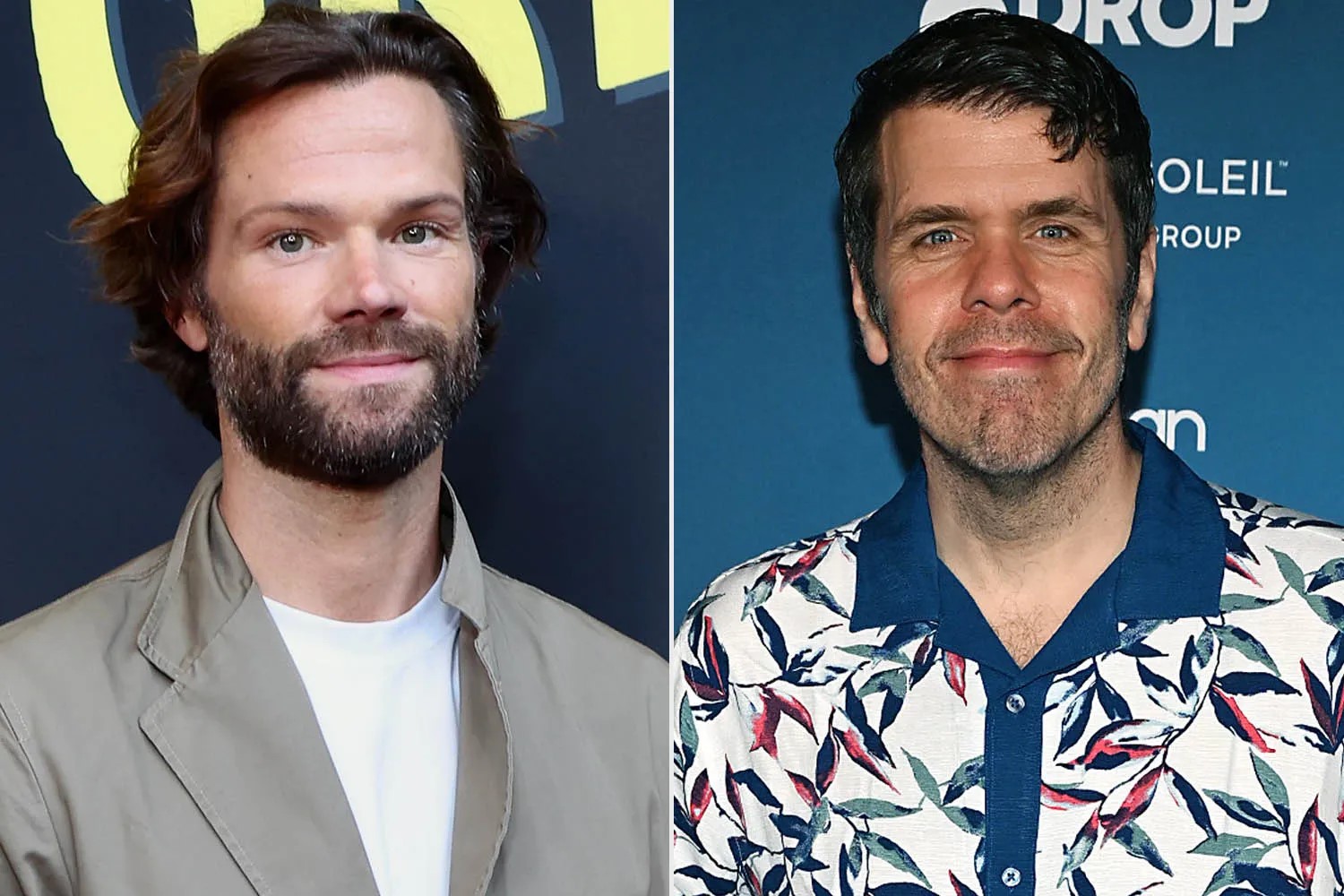
Jared Padalecki has withdrawn a public message of support for Perez Hilton after learning more about the celebrity blogger’s controversial history, turning a brief gesture of compassion into a wider conversation about forgiveness, accountability and the risks of reacting to a crisis without full context.
The Supernatural star initially addressed Hilton on social media after the blogger was hospitalized following a severe mental health crisis. Padalecki encouraged him to seek support and described difficult periods in life as temporary, drawing on his own long-standing public advocacy for mental health awareness.
The message quickly attracted criticism from people who pointed Padalecki toward Hilton’s history of aggressive and controversial celebrity coverage. The criticism was particularly complicated by the fact that Hilton had previously covered aspects of Padalecki’s own personal life.
Padalecki subsequently deleted the original message and acknowledged that he had not understood the extent of Hilton’s past conduct when he wrote it. He apologized and later clarified that, while he believed in extending forgiveness, he did not support actions he had subsequently learned about.
The episode illustrates the increasingly complicated role celebrities play when responding to highly visible personal crises.
Social media encourages immediate reactions. A public figure can offer sympathy within seconds, but the same immediacy leaves little room for researching a person's history or considering how a message may be interpreted by people who were previously affected by that individual.
In Padalecki's case, the original post was rooted in empathy rather than an apparent attempt to defend Hilton's professional record. His response was shaped partly by his own experiences with mental health challenges and his belief that people experiencing a crisis deserve compassion.
That distinction became important once the broader history surrounding Hilton entered the discussion.
Hilton, whose birth name is Mario Armando Lavandeira Jr., became one of the most recognizable figures in celebrity blogging through PerezHilton.com. His approach to entertainment coverage helped define a particularly confrontational era of online celebrity media, but also generated years of criticism over invasive, mocking and harmful coverage of public figures.
The controversy surrounding Hilton is therefore not simply about an individual celebrity dispute. It reflects a larger shift in how the entertainment industry evaluates the legacy of early digital gossip culture.
Celebrity blogs once operated in an environment where provocative coverage could generate enormous traffic and attention. The commercial incentives rewarded immediacy, controversy and personal access, often before the broader entertainment industry had established clear expectations about digital privacy and responsible online reporting.
The standards have changed considerably since then.
Audiences are increasingly sensitive to the impact that public commentary can have on mental health, personal privacy and professional reputations. As a result, figures associated with the more aggressive era of celebrity blogging face greater scrutiny over how their past behavior is interpreted today.
That context explains why Padalecki's post produced such a strong reaction despite its relatively simple message.
The actor's decision to remove it also highlights a second tension: whether forgiveness should be separated from accountability.
Padalecki emphasized the value of grace and forgiveness, while simultaneously making clear that forgiveness did not mean endorsing behavior he considered harmful. His revised position attempts to distinguish compassion for someone experiencing a crisis from approval of that person's previous conduct.
That distinction has broader relevance beyond this particular incident.
Public figures increasingly face situations in which an individual's current vulnerability intersects with a controversial past. Responding to the immediate crisis can be viewed as an act of humanity, while acknowledging historical harm remains necessary for people who were affected by it.
The two positions do not necessarily have to cancel each other out.
Hilton's hospitalization has already produced examples of this complicated response. Some people who previously criticized or described themselves as targets of his coverage have nevertheless expressed concern for his recovery.
That suggests that personal forgiveness and public accountability can coexist, even when the relationship between the two is difficult to navigate.
The immediate circumstances also add sensitivity to the story.
Hilton was hospitalized after a disturbing TikTok livestream that prompted calls to authorities. His family and representatives later said he remained in serious but stable condition and would require surgery for injuries sustained during the incident.
The details have intensified public discussion around mental health and the responsibilities of online platforms and audiences when highly distressing content is broadcast publicly.
For Padalecki, the subject has particular personal significance.
The actor has spoken publicly about his own mental health struggles and previously disclosed experiencing severe suicidal thoughts. In 2015, he launched the Always Keep Fighting campaign, which focuses on supporting people dealing with depression, addiction and self-harm.
That history helps explain why his initial reaction focused on compassion rather than Hilton's professional reputation.
It also demonstrates why celebrity advocacy around mental health can become complicated when it intersects with public controversies.
Padalecki's response was ultimately not a reversal of his broader position on mental health. Instead, he attempted to separate support for someone going through a crisis from approval of that person's history.
The incident also offers a lesson about the changing dynamics of celebrity communication.
In traditional media, public statements typically passed through representatives, interviews or editorial processes. Social platforms have removed much of that distance. Celebrities can now communicate directly with millions of people, but they also have to manage the consequences of publishing without the same layer of mediation.
A deleted post does not necessarily disappear from public memory. Screenshots, reposts and commentary can preserve the original message long after it has been removed.
That makes social media increasingly similar to a permanent public record, even when individual posts are technically temporary.
For entertainment brands and public figures, the episode reinforces the importance of context.
A short statement intended as an expression of empathy can be interpreted as an endorsement if audiences associate the recipient with a controversial history. Conversely, acknowledging someone's humanity during a crisis does not necessarily erase or excuse the harm associated with their past.
The challenge is finding language that recognizes both realities.
Padalecki's subsequent apology attempted to do precisely that. He acknowledged his lack of knowledge, accepted responsibility for speaking without the full context and explicitly rejected actions he had only later learned about.
The episode is therefore less about a celebrity changing his mind than about the difficulty of navigating compassion in an environment where personal histories are instantly searchable and public reactions are immediate.
It also shows how the legacy of celebrity media continues to shape contemporary entertainment culture.
Figures who helped build the early online gossip economy are now being evaluated against standards that place greater emphasis on privacy, mental health and the consequences of public humiliation.
Hilton himself apologized earlier in 2026 for what he described as selfish behavior during his years as a blogger and said he intended to approach his work differently.
That evolution does not erase the controversies associated with his career, but it adds another layer to the current discussion about whether people can acknowledge past harm while attempting to change.
For audiences, the episode ultimately presents a more complicated question than whether Padalecki was right or wrong to offer support.
It asks whether compassion during a personal crisis should depend on a person's history, and whether extending humanity to someone in distress can coexist with accountability for the damage they may have caused.
There is no simple answer.
But Padalecki's decision to remove his message and clarify his position demonstrates how quickly those questions can become public when celebrities respond to unfolding crises in real time.
The broader lesson for the entertainment industry is that empathy and accountability increasingly operate together. Public figures are expected to recognize immediate human suffering while remaining aware of the histories and consequences surrounding the people they publicly support.
In an era where a single social media post can become a major news story within hours, that balance is becoming an essential part of celebrity communication.
News You Should See
P&G Raises Fiscal 2027 Cost Warning as Oil and Freight Expenses Threaten Profits
Chemical Tank Leak in Toledo Triggers Evacuations and Industrial Disruptions
Judge Sets December 11 Deadline for Trump Deposition in BBC Defamation Case
Iowa Senate Race Tests How Far Republicans Can Separate Themselves From Trump
California State Workers Strike Over Pay, Healthcare and Return-to-Office Rules
Streaming’s October Showdown: How Disney, Netflix and Major Entertainment Brands Compete for Audiences
Latest News
Procter & Gamble expects commodity, energy and transportation costs to reduce fiscal 2027 profit by $1.4 billion. Quarterly sales rose 4% to $23.28 billion, beating analyst expectations.
A ruptured chemical tank in Toledo, Ohio, prompted evacuations, school closures and an industrial shutdown. Authorities have reduced the restricted zone as the release slows and cleanup preparations continue.
A federal judge has ordered Donald Trump to give a deposition by December 11, 2026, in his $10 billion lawsuit against the BBC, with possible sanctions for noncompliance as the discovery deadline approaches.
Iowa’s 2026 Senate race pits Republican Ashley Hinson, balancing Trump support with economic concerns, against Democrat Josh Turek, who emphasizes bipartisanship amid rising campaign spending.
Thousands of California state workers struck on October 21 over a proposed three-year pay increase, healthcare costs and a four-day office attendance requirement as contract negotiations continued.
October 2026 brings major entertainment releases across Disney+, Netflix, HBO Max, Hulu, Prime Video and Peacock. Explore how familiar franchises, exclusive programming, new music and video games shape competition for streaming audiences.
Saudia advises travelers to book flights through Al Qassim Airport for Riyadh connections, offering free hourly shuttle buses in both directions until further notice.
An AP-NORC poll shows Democratic confidence in accurate vote counting falling to 55%, while Republican confidence rises to 38%, highlighting election integrity concerns ahead of the 2026 US midterms.
Donald Trump campaigns in North Carolina ahead of the November 2026 midterms as low approval ratings, rising fuel costs, Democratic early-voting gains and funding disparities challenge Republican efforts to retain control of Congress.