Samsung Reportedly Turns to TSMC’s 3nm Technology for Nvidia’s Next-Generation AI Memory
Samsung is reportedly considering TSMC’s 3nm process for base dies in next-generation HBM designed for Nvidia, highlighting growing specialization across the AI chip supply chain.

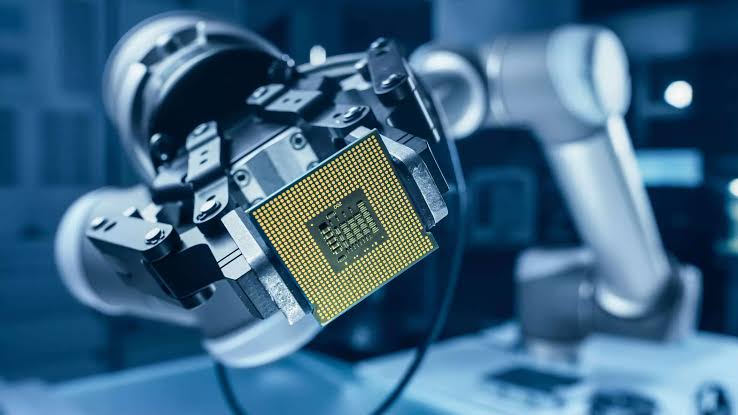
The semiconductor industry’s race to supply artificial intelligence infrastructure is creating partnerships that cross traditional competitive boundaries. A reported plan involving Samsung Electronics, Taiwan Semiconductor Manufacturing Co. (TSMC) and Nvidia offers a clear example of how increasingly specialized manufacturing requirements are influencing the structure of the chip supply chain.
According to a report published by South Korea’s Seoul Economic Daily and cited by Reuters, Samsung is expected to use TSMC’s advanced 3-nanometer manufacturing technology to produce base dies for next-generation high-bandwidth memory (HBM) intended for Nvidia. The report describes a potential manufacturing arrangement, but the companies’ commercial terms, production timeline and final technical specifications have not been established in the available information.
Why HBM Has Become Strategically Important
The expansion of AI computing has increased the importance of memory technologies capable of moving large volumes of data efficiently. Modern AI systems depend not only on powerful processors but also on memory infrastructure that can supply those processors with data at the speed demanding workloads require.
High-bandwidth memory addresses this requirement by providing substantial data throughput in a compact configuration. As AI models and computing workloads become more demanding, memory performance, packaging design and manufacturing precision increasingly influence the capabilities of complete computing systems.
The reported use of a 3nm process for HBM base dies is significant because it points to the growing sophistication of the underlying components. These dies form part of the memory architecture, and their manufacturing technology can affect the design options available to engineers. However, the report does not establish the precise performance benefits, power savings or commercial advantages that the proposed arrangement might deliver.
Complementary Capabilities Behind the Reported Arrangement
Samsung and TSMC occupy different but overlapping positions in the semiconductor ecosystem. Samsung is a major memory-chip manufacturer with broader semiconductor operations, while TSMC specializes in contract chip manufacturing for customers across the industry.
The reported plan would bring these capabilities together around a product category that has become increasingly important to AI infrastructure. Rather than relying exclusively on its own manufacturing resources for every component, Samsung would reportedly draw on TSMC’s advanced process technology for a specific part of the memory design.
Such an arrangement illustrates how technical specialization can encourage cooperation between companies that also compete for business in the wider semiconductor market. Advanced chip development requires substantial investment, manufacturing expertise and coordination across several production stages. Access to a partner’s capabilities can become strategically relevant when a product requires technologies that are difficult to develop, qualify or scale simultaneously within one organization.
That does not mean the two companies are abandoning competition. Their broader commercial interests remain distinct, and the reported collaboration should be understood as a potential targeted manufacturing relationship rather than evidence of a wider strategic alliance.
What the Development Could Mean for Nvidia
For Nvidia, the strategic importance of advanced memory lies in its contribution to the performance and production of AI computing systems. Processors alone do not determine system capabilities; memory bandwidth, capacity, packaging and the availability of supporting components also matter.
A manufacturing arrangement that combines Samsung’s memory expertise with TSMC’s process technology could, if implemented successfully, provide another route for developing the memory components required by future Nvidia platforms. It could also illustrate how leading AI hardware suppliers depend on multiple specialized manufacturers rather than a single vertically integrated production chain.
The commercial outcome, however, remains uncertain. The available report does not specify production volumes, delivery commitments, pricing, customer qualification milestones or whether the arrangement has reached a binding commercial stage. It is therefore premature to conclude that the reported plan will increase Nvidia’s product output, lower costs or deliver a measurable performance improvement.
Competitive and Economic Implications
The broader market context is one of rising technical complexity and significant investment requirements. Semiconductor manufacturers must balance the cost of advanced production processes against the commercial value of improved performance, reliability and manufacturing efficiency.
For Samsung, access to TSMC’s process technology could potentially support the development of specialized memory products for a strategically important customer. The arrangement may also demonstrate that competitiveness in the memory market increasingly depends on coordinating different manufacturing disciplines, not solely on producing memory chips at scale.
For TSMC, participation in a project involving advanced memory components could extend the relevance of its manufacturing capabilities within the AI hardware ecosystem. Nevertheless, the available information does not disclose the financial contribution or expected revenue associated with the reported work, so its direct commercial significance cannot yet be quantified.
The development also highlights a supply-chain consideration: when critical AI components depend on specialized production capabilities, coordination between suppliers becomes essential. Such cooperation can create additional manufacturing options, but it can also introduce dependencies that must be managed through qualification processes, production planning and commercial agreements.
What Comes Next
The key indicators to watch are confirmation from the companies, clarification of the proposed division of manufacturing responsibilities, the expected production schedule and the specifications of the resulting memory products. Evidence of customer qualification and commercial production would provide a stronger basis for assessing the arrangement’s importance.
Until those details emerge, the reported plan is best viewed as an indication of how the AI semiconductor sector is evolving. As computing demand expands, competitive advantage increasingly depends on combining specialized technologies across company boundaries. If confirmed and executed, the reported Samsung–TSMC arrangement could become one example of that shift, although its actual impact on Nvidia’s products and the wider market will depend on details that remain undisclosed.
News You Should See
P&G Raises Fiscal 2027 Cost Warning as Oil and Freight Expenses Threaten Profits
Chemical Tank Leak in Toledo Triggers Evacuations and Industrial Disruptions
Judge Sets December 11 Deadline for Trump Deposition in BBC Defamation Case
Iowa Senate Race Tests How Far Republicans Can Separate Themselves From Trump
California State Workers Strike Over Pay, Healthcare and Return-to-Office Rules
Streaming’s October Showdown: How Disney, Netflix and Major Entertainment Brands Compete for Audiences
Latest News
Procter & Gamble expects commodity, energy and transportation costs to reduce fiscal 2027 profit by $1.4 billion. Quarterly sales rose 4% to $23.28 billion, beating analyst expectations.
A ruptured chemical tank in Toledo, Ohio, prompted evacuations, school closures and an industrial shutdown. Authorities have reduced the restricted zone as the release slows and cleanup preparations continue.
A federal judge has ordered Donald Trump to give a deposition by December 11, 2026, in his $10 billion lawsuit against the BBC, with possible sanctions for noncompliance as the discovery deadline approaches.
Iowa’s 2026 Senate race pits Republican Ashley Hinson, balancing Trump support with economic concerns, against Democrat Josh Turek, who emphasizes bipartisanship amid rising campaign spending.
Thousands of California state workers struck on October 21 over a proposed three-year pay increase, healthcare costs and a four-day office attendance requirement as contract negotiations continued.
October 2026 brings major entertainment releases across Disney+, Netflix, HBO Max, Hulu, Prime Video and Peacock. Explore how familiar franchises, exclusive programming, new music and video games shape competition for streaming audiences.
Saudia advises travelers to book flights through Al Qassim Airport for Riyadh connections, offering free hourly shuttle buses in both directions until further notice.
An AP-NORC poll shows Democratic confidence in accurate vote counting falling to 55%, while Republican confidence rises to 38%, highlighting election integrity concerns ahead of the 2026 US midterms.
Donald Trump campaigns in North Carolina ahead of the November 2026 midterms as low approval ratings, rising fuel costs, Democratic early-voting gains and funding disparities challenge Republican efforts to retain control of Congress.