Trump Heads to Alaska to Bolster Dan Sullivan as Senate Race Draws National Attention
The president's campaign rally in Wasilla highlights Republican concerns about retaining control of Congress as inflation, high gasoline prices and an increasingly competitive Senate contest challenge the party's prospects.

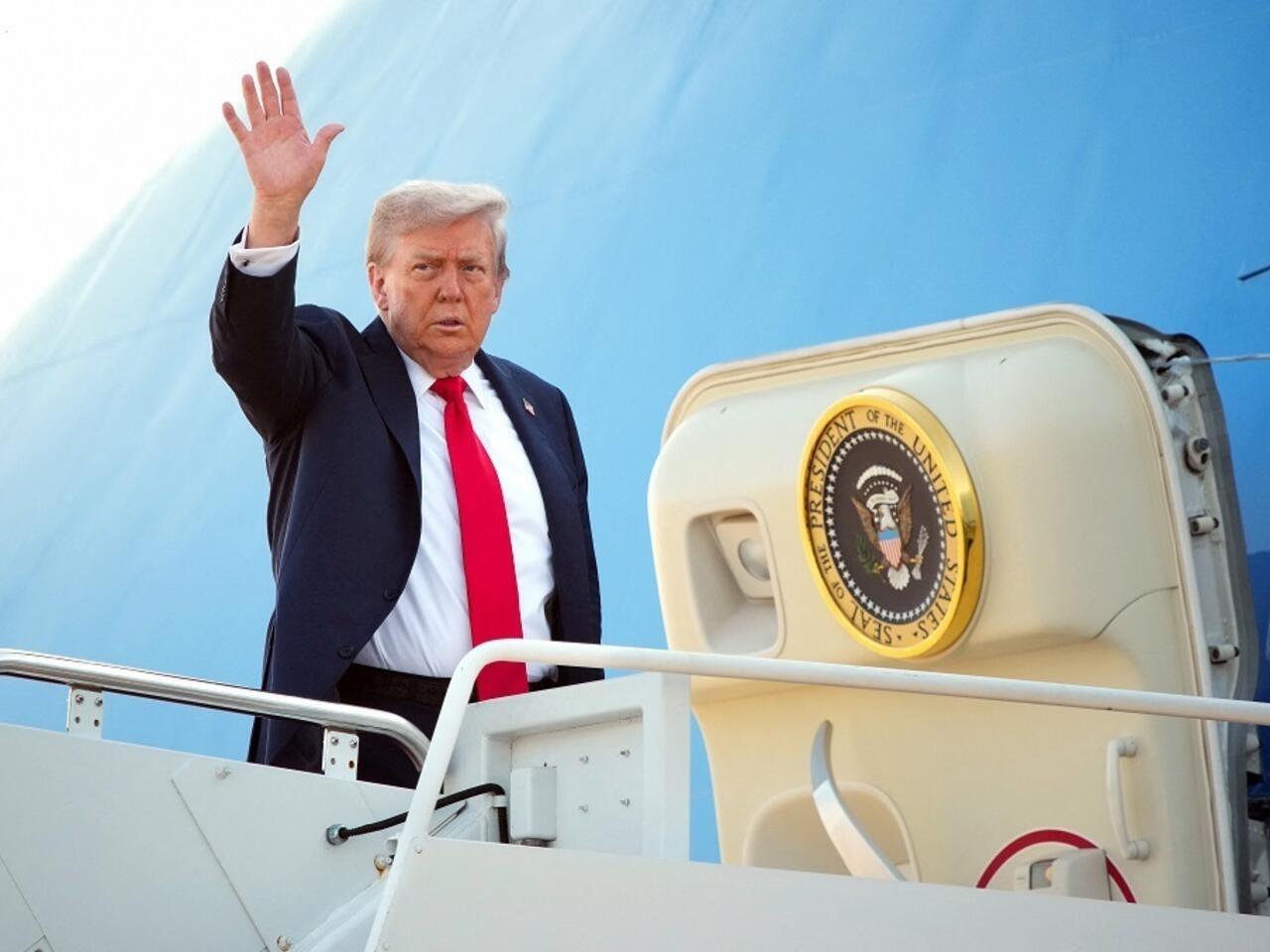
President Donald Trump's decision to travel to Alaska to campaign for Republican Sen. Dan Sullivan underscores the growing importance of individual Senate contests in the battle for control of Congress. With the November 3 midterm elections approaching, the visit signals that Republicans are not treating traditionally conservative states as guaranteed victories.
Trump is scheduled to headline a rally in Wasilla, roughly 45 miles north of Anchorage, as part of a western campaign swing that also includes Arizona and Montana. The Alaska stop is particularly notable because it requires the president to travel across four time zones to support an incumbent whose state has historically favored Republicans in federal elections.
Sullivan is seeking a third Senate term and faces Democratic challenger Mary Peltola, a former member of the House of Representatives who has made the cost of living a central theme of her campaign. Her focus on household expenses gives Democrats a way to compete on economic concerns in a state where Republican candidates have traditionally enjoyed an advantage.
Economic pressures complicate the Republican position
Alaska's political reputation has long made it a relatively dependable state for Republicans. Democrats last won a Senate seat there in 2008, and the state has not elected a Democratic governor since 1998. Yet historical voting patterns do not eliminate the impact of current economic conditions.
Elevated inflation and high gasoline prices associated with the war involving Iran have weighed on Trump's approval ratings. These pressures could influence voters who supported him in 2024 but are now less certain about the administration's performance. Alaska pollster Ivan Moore has reported a decline in Trump's statewide support that reflects a broader national trend.
For Peltola, the economic debate offers an opportunity to challenge the incumbent without relying exclusively on partisan arguments. The cost of fuel and other essential expenses can be particularly consequential in a geographically vast state where transportation and energy costs affect households and businesses. Whether these concerns translate into enough votes to overcome Alaska's Republican lean remains uncertain.
National Republican support signals the stakes
Trump's visit follows an earlier campaign appearance by Vice President JD Vance in Fairbanks, demonstrating that the Republican leadership is directing substantial political attention toward Sullivan's reelection effort. The president's personal involvement also gives the campaign a platform to connect the senator's record with the administration's priorities.
Energy policy is an important part of that relationship. The Trump administration has prioritized expanding access to Alaska's oil and gas resources, a policy direction that aligns with the state's significance in the U.S. energy sector. Sullivan has also appeared alongside Trump at the White House during an announcement concerning a proposed $54 billion South Korean government investment in an Alaska natural gas project.
However, South Korea has indicated that the agreement and its total value have not been finalized. The distinction matters because announced investment figures do not necessarily translate into completed financing, construction activity or immediate economic benefits. For Alaska, the eventual outcome could affect expectations for infrastructure development, employment and future energy production, but the proposal should not be treated as a completed investment.
The energy agenda may help Sullivan reinforce his alignment with federal policy. At the same time, the election will test whether support for resource development is enough to offset voters' concerns about inflation and everyday expenses.
Alaska's voting rules add another layer of uncertainty
The state's election system makes the contest more complicated. Alaska uses an open primary in which the four leading candidates advance to the general election regardless of party affiliation, followed by ranked-choice voting in the general election.
The November ballot will also include another candidate named Dan Sullivan: retired teacher Dan J. Sullivan. The incumbent's allies, including Trump, have questioned the challenger's candidacy, while the retired teacher has denied allegations that his campaign is illegitimate. The presence of candidates with the same name could create confusion for some voters, although its ultimate effect on the outcome cannot be assumed in advance.
Trump has also criticized aspects of Alaska's election procedures. Republican leaders in the state have encouraged voters to rank Republican candidates, reflecting the strategic importance of how ballots are completed under the ranked-choice system.
The contest for Alaska's other U.S. House seat adds to the state's broader electoral significance. Republican Rep. Nick Begich faces independent challenger Bill Hill, giving Trump's rally an additional purpose beyond Sullivan's Senate campaign.
A test of Trump's political influence
Trump previously campaigned in Alaska in 2022 against Republican Sen. Lisa Murkowski after she voted to convict him during his second impeachment trial. He endorsed Kelly Tshibaka, but Murkowski ultimately won reelection. That result illustrates the limits of presidential endorsements in a state where voters can place a premium on candidate identity and political independence.
Alaska has a relatively small population of about 740,000, but its Senate contest could carry national consequences if the race contributes to a shift in the balance of power in Washington. In a closely divided Senate, a small number of competitive states can determine which party controls committee leadership, legislative priorities and the chamber's broader agenda.
For Republicans, the immediate objective is to turn Trump's visibility and campaign organization into stronger turnout for Sullivan. For Democrats, the opportunity lies in persuading voters that local economic pressures and candidate-specific concerns deserve more weight than traditional party loyalties.
The visit is therefore more than a show of support for one senator. It is a test of whether Trump's political standing remains strong enough to help Republican candidates in states where economic dissatisfaction is creating openings for challengers. The outcome will depend not only on the president's ability to energize his base, but also on how Alaska voters assess the economy, Sullivan's record and the alternatives available on a distinctive ballot.
News You Should See
P&G Raises Fiscal 2027 Cost Warning as Oil and Freight Expenses Threaten Profits
Chemical Tank Leak in Toledo Triggers Evacuations and Industrial Disruptions
Judge Sets December 11 Deadline for Trump Deposition in BBC Defamation Case
Iowa Senate Race Tests How Far Republicans Can Separate Themselves From Trump
California State Workers Strike Over Pay, Healthcare and Return-to-Office Rules
Streaming’s October Showdown: How Disney, Netflix and Major Entertainment Brands Compete for Audiences
Latest News
Procter & Gamble expects commodity, energy and transportation costs to reduce fiscal 2027 profit by $1.4 billion. Quarterly sales rose 4% to $23.28 billion, beating analyst expectations.
A ruptured chemical tank in Toledo, Ohio, prompted evacuations, school closures and an industrial shutdown. Authorities have reduced the restricted zone as the release slows and cleanup preparations continue.
A federal judge has ordered Donald Trump to give a deposition by December 11, 2026, in his $10 billion lawsuit against the BBC, with possible sanctions for noncompliance as the discovery deadline approaches.
Iowa’s 2026 Senate race pits Republican Ashley Hinson, balancing Trump support with economic concerns, against Democrat Josh Turek, who emphasizes bipartisanship amid rising campaign spending.
Thousands of California state workers struck on October 21 over a proposed three-year pay increase, healthcare costs and a four-day office attendance requirement as contract negotiations continued.
October 2026 brings major entertainment releases across Disney+, Netflix, HBO Max, Hulu, Prime Video and Peacock. Explore how familiar franchises, exclusive programming, new music and video games shape competition for streaming audiences.
Saudia advises travelers to book flights through Al Qassim Airport for Riyadh connections, offering free hourly shuttle buses in both directions until further notice.
An AP-NORC poll shows Democratic confidence in accurate vote counting falling to 55%, while Republican confidence rises to 38%, highlighting election integrity concerns ahead of the 2026 US midterms.
Donald Trump campaigns in North Carolina ahead of the November 2026 midterms as low approval ratings, rising fuel costs, Democratic early-voting gains and funding disparities challenge Republican efforts to retain control of Congress.