Trump Names Katie Zacharia White House Press Secretary
The Trump Media & Technology Group communications adviser will succeed Karoline Leavitt, bringing experience in conservative media, political campaigns and government communications to one of the administration’s most visible roles.

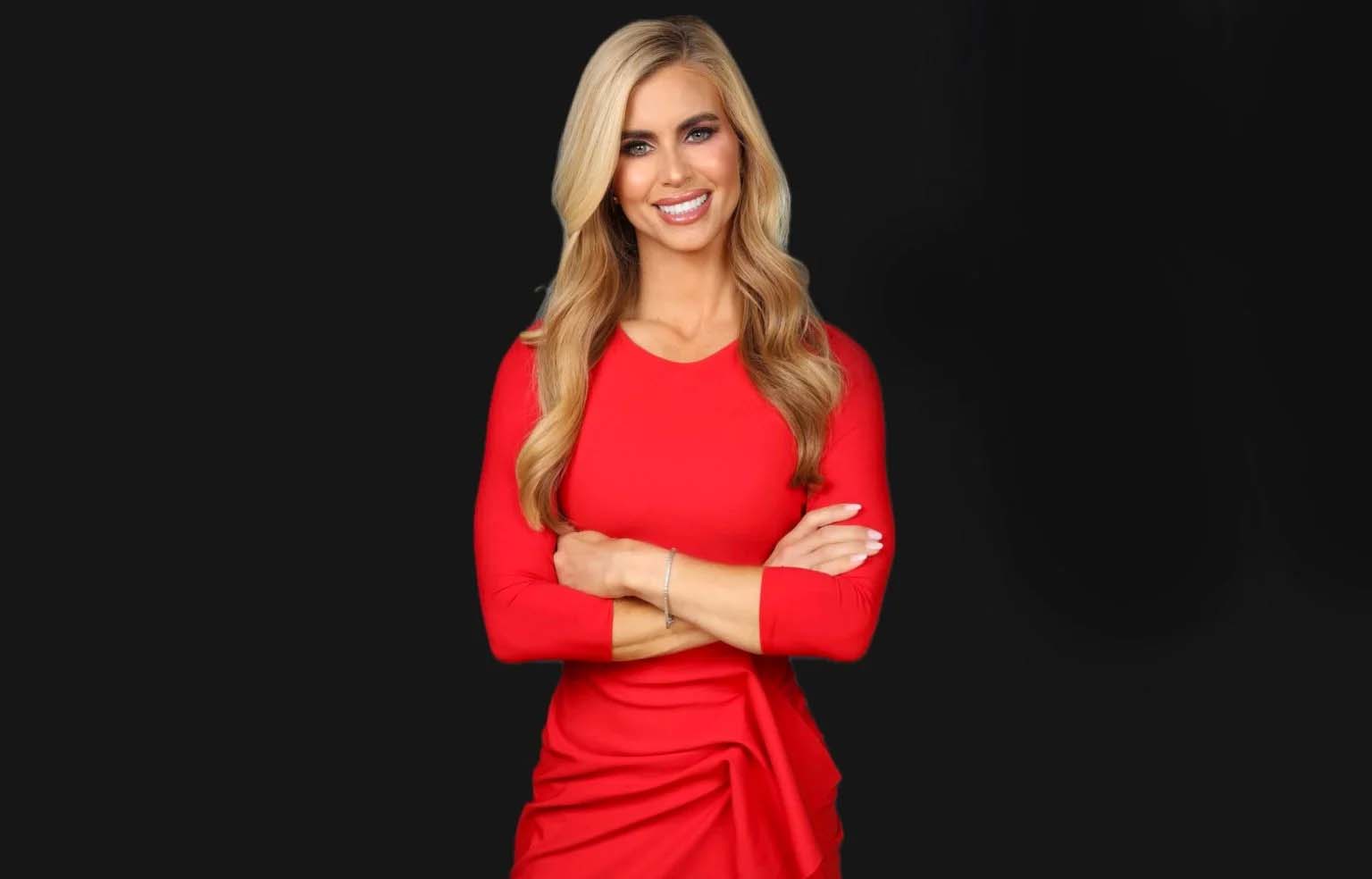
President Donald Trump’s selection of Katie Zacharia as the next White House press secretary underscores the importance his administration places on political alignment, message discipline and direct communication with its supporters. Zacharia, a communications adviser at Trump Media & Technology Group and a conservative media commentator, will succeed Karoline Leavitt in a role that sits at the intersection of government policy, political strategy and public accountability.
Trump announced the appointment on Truth Social, the social media platform operated by his media company. His decision to elevate a figure with experience inside his broader communications network reflects a preference for officials who understand both his political priorities and the administration’s approach to public messaging.
Zacharia has previously appeared as a commentator on Fox News and Newsmax and briefly served as a spokesperson for the Department of Homeland Security earlier in 2026. Trump also highlighted her involvement in his presidential campaigns, particularly in competitive states. She holds a law degree from Pepperdine University, according to her LinkedIn profile.
The appointment follows Leavitt’s departure from the position in August. She announced her decision to leave on August 12 and departed on August 27, saying she wanted to spend more time with her young children. Fox News has said she will join the network as an on-air contributor beginning November 1. Leavitt had served as White House press secretary since January 2025, after acting as national press secretary for Trump’s 2024 presidential campaign.
Communications strategy becomes a test of political management
The White House press secretary is responsible for presenting the administration’s position to reporters, responding to questions about government decisions and explaining policy to the public. The role can influence how quickly and effectively the president’s agenda is communicated, although major policy decisions remain the responsibility of the president and relevant officials.
Zacharia’s background suggests continuity in the administration’s preference for a communications team closely aligned with Trump’s political approach. Her experience in conservative media may help her navigate an audience familiar with the president’s messaging, while her government experience provides a foundation for dealing with official policy and institutional responsibilities.
However, communicating with a supportive audience and answering questions from a broad press corps are different tasks. The daily briefing room requires the spokesperson to address difficult questions, distinguish confirmed information from political argument and explain decisions that may be controversial or still evolving. The effectiveness of the appointment will therefore depend not only on message consistency but also on credibility, preparation and the ability to respond under scrutiny.
The connection between government and a political media brand
Zacharia’s position at Trump Media & Technology Group adds another dimension to the appointment. The company operates Truth Social, a platform Trump regularly uses to announce political decisions and communicate directly with his audience. Moving a communications adviser from that corporate environment into the White House press operation creates a visible link between the president’s media ecosystem and the administration’s official messaging.
That connection does not, by itself, establish that government communications will be controlled by the company. It does, however, highlight the growing significance of direct-to-audience platforms in political communication. Social media enables leaders to release statements without waiting for traditional news coverage, while press briefings provide an opportunity for journalists to challenge claims, seek clarification and establish context.
For the administration, coordinating these channels can help ensure that announcements reach supporters quickly and that its public position remains consistent across platforms. The corresponding challenge is to maintain a clear distinction between campaign-style messaging, corporate communications and the White House’s institutional responsibility to provide accurate information about government actions.
Experience across media and government
Zacharia’s career has included work in conservative broadcasting, political campaigns and a short period as a Department of Homeland Security spokesperson. These roles expose her to different parts of the communications process, from framing political arguments for television audiences to representing a government department.
Her legal education may also be relevant to a position that routinely involves questions about executive authority, immigration, national security and federal policy. A law degree does not itself establish expertise in every policy area, but familiarity with legal reasoning can be useful when explaining decisions that involve statutory requirements or ongoing disputes.
The central question is how these experiences translate into the daily demands of the White House briefing room. The press secretary must work with policy officials, communications staff and the president’s senior advisers while responding to a fast-moving news cycle. Coordination is particularly important when different officials speak on the same issue or when an initial announcement is followed by additional details.
Accountability and the public information challenge
The appointment comes at a time when the White House communications operation faces the continuing challenge of explaining contentious policy decisions to the public. A spokesperson’s role is not limited to promoting the administration’s achievements; it also involves addressing setbacks, clarifying conflicting statements and providing information that allows citizens to understand the consequences of government action.
A communications strategy that relies heavily on political loyalty can provide consistency, but it must also accommodate the practical requirements of public administration. Reporters routinely seek answers on matters that do not fit neatly into the president’s preferred narrative. The administration’s credibility will depend in part on whether its press operation can respond with substantive information rather than relying exclusively on repeated political talking points.
The appointment should also be viewed separately from the administration’s broader policy direction. A change in spokesperson can affect tone, access and the presentation of government decisions, but it does not automatically signal a change in policy. Any substantive shift would need to be assessed through official decisions and actions rather than personnel announcements alone.
What the appointment signals going forward
Zacharia’s transition from a communications role at Trump Media & Technology Group to the White House press secretary position highlights the administration’s emphasis on trusted political communicators. Her media appearances, campaign experience and brief government service give her a background that differs from a conventional career focused exclusively on institutional press relations.
Her performance will be measured by how effectively she handles the daily briefing schedule, communicates policy changes, responds to scrutiny and maintains working relationships with journalists. It will also depend on how closely the White House coordinates its official statements with direct communications from the president.
For the broader political media landscape, the appointment illustrates the continuing overlap between digital platforms, partisan commentary and government communications. Yet the responsibilities of the press secretary remain distinct: the role represents the White House to the press and the public, not simply a media brand or a political campaign.
The transition marks a change in personnel rather than a confirmed change in policy. Its longer-term significance will become clearer through Zacharia’s approach to briefings, the level of detail the administration provides on difficult issues and the extent to which its communications operation balances political consistency with the public’s need for reliable information.
News You Should See
P&G Raises Fiscal 2027 Cost Warning as Oil and Freight Expenses Threaten Profits
Chemical Tank Leak in Toledo Triggers Evacuations and Industrial Disruptions
Judge Sets December 11 Deadline for Trump Deposition in BBC Defamation Case
Iowa Senate Race Tests How Far Republicans Can Separate Themselves From Trump
California State Workers Strike Over Pay, Healthcare and Return-to-Office Rules
Streaming’s October Showdown: How Disney, Netflix and Major Entertainment Brands Compete for Audiences
Latest News
Procter & Gamble expects commodity, energy and transportation costs to reduce fiscal 2027 profit by $1.4 billion. Quarterly sales rose 4% to $23.28 billion, beating analyst expectations.
A ruptured chemical tank in Toledo, Ohio, prompted evacuations, school closures and an industrial shutdown. Authorities have reduced the restricted zone as the release slows and cleanup preparations continue.
A federal judge has ordered Donald Trump to give a deposition by December 11, 2026, in his $10 billion lawsuit against the BBC, with possible sanctions for noncompliance as the discovery deadline approaches.
Iowa’s 2026 Senate race pits Republican Ashley Hinson, balancing Trump support with economic concerns, against Democrat Josh Turek, who emphasizes bipartisanship amid rising campaign spending.
Thousands of California state workers struck on October 21 over a proposed three-year pay increase, healthcare costs and a four-day office attendance requirement as contract negotiations continued.
October 2026 brings major entertainment releases across Disney+, Netflix, HBO Max, Hulu, Prime Video and Peacock. Explore how familiar franchises, exclusive programming, new music and video games shape competition for streaming audiences.
Saudia advises travelers to book flights through Al Qassim Airport for Riyadh connections, offering free hourly shuttle buses in both directions until further notice.
An AP-NORC poll shows Democratic confidence in accurate vote counting falling to 55%, while Republican confidence rises to 38%, highlighting election integrity concerns ahead of the 2026 US midterms.
Donald Trump campaigns in North Carolina ahead of the November 2026 midterms as low approval ratings, rising fuel costs, Democratic early-voting gains and funding disparities challenge Republican efforts to retain control of Congress.