Trump-Zelenskiy Rift Puts Critical U.S. Military and Intelligence Support for Ukraine at Risk
Disputes over Russian oil strikes, fuel prices and sanctions are straining Washington-Kyiv relations as Ukraine faces another winter of attacks on its energy infrastructure.

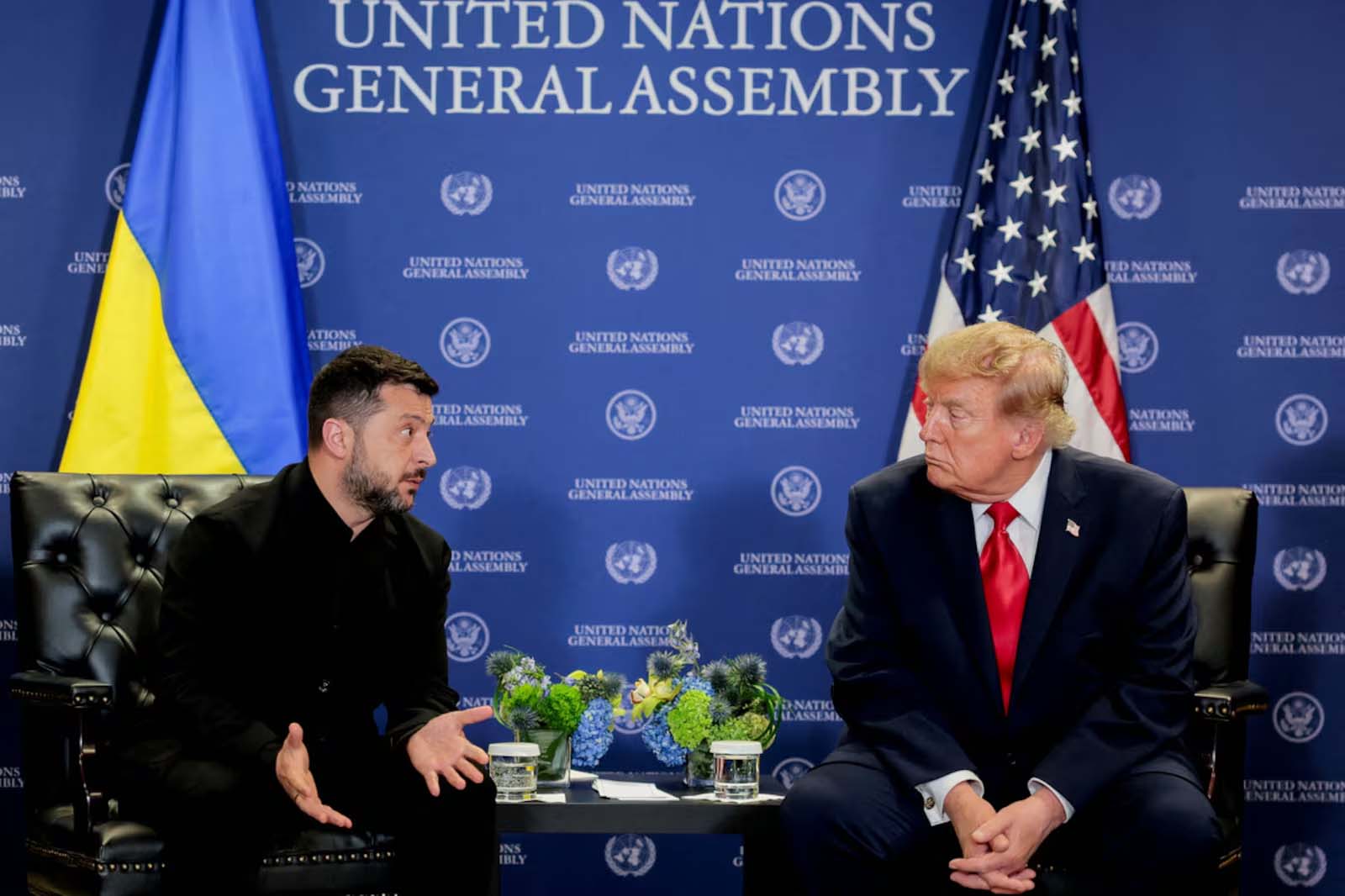
The growing confrontation between U.S. President Donald Trump and Ukrainian President Volodymyr Zelenskiy is creating new uncertainty over the future of American support for Ukraine, with potential consequences for the battlefield, European security and global energy markets.
What began as a dispute over fuel prices and Ukrainian attacks on Russian oil facilities has expanded into a broader disagreement over sanctions, military cooperation and the terms under which the war with Russia might end. The deterioration in relations is particularly consequential because Washington remains a central source of military equipment, intelligence and technology that Ukraine relies on to defend its territory.
Trump has repeatedly criticized Zelenskiy over Ukrainian strikes against Russian energy infrastructure, arguing that the attacks contribute to higher fuel prices. The U.S. president has also pursued arrangements intended to increase fuel supplies, including a deal announced on October 9 to temporarily ease restrictions on Russian fuel and allow diesel imports from Russia.
For Kyiv, the approach raises a fundamental strategic concern: measures intended to relieve pressure on American consumers could simultaneously provide Moscow with additional economic opportunities while weakening the international pressure designed to constrain its war effort.
Energy Prices Reshape the Political Relationship
The dispute reflects the increasingly direct connection between energy policy and decisions about military support. Higher gasoline and diesel prices have become a political liability for Trump ahead of the November U.S. midterm elections, when Republicans face the possibility of losing their majorities in Congress.
Trump has linked the increase in fuel costs partly to Ukrainian attacks on Russian refineries. However, the wider energy crisis has also been driven by the U.S.-Israeli war with Iran, attacks on energy infrastructure and the severe disruption of shipping through the Strait of Hormuz, a critical route for global oil supplies.
This distinction matters because decisions based on a narrow assessment of Ukrainian operations may not resolve the underlying causes of higher energy prices. At the same time, expanding Russian fuel exports could offer Moscow additional revenue while creating disagreements among Western governments over the effectiveness and consistency of sanctions.
The administration's approach therefore places competing priorities in direct tension: reducing domestic energy costs, maintaining pressure on Russia and preserving Ukraine's capacity to resist further attacks.
Military Dependence Creates Strategic Vulnerabilities
The immediate consequences extend beyond diplomatic disagreements. Ukraine depends heavily on American intelligence to identify incoming threats and assess Russian military movements. Any reduction in intelligence sharing could make it more difficult for Ukrainian forces to detect and respond to missile and drone attacks, particularly as Russian strikes increasingly threaten power generation and other essential infrastructure.
Zelenskiy said Ukraine had received no advance warning from Western partners before a deadly Russian attack on Kyiv. He also indicated that American officials had warned Ukrainian commanders that intelligence cooperation could be reduced or suspended. Trump, meanwhile, has maintained that intelligence sharing with Ukraine continues.
Satellite communications have added another source of uncertainty. Ukraine's military-grade Starshield service, based on SpaceX technology, experienced a disruption that raised questions about the extent to which operational capabilities depend on systems controlled by American companies and subject to decisions by the U.S. administration. The service was subsequently partially restored.
The episode illustrates a broader challenge for countries that rely on foreign-controlled digital infrastructure during wartime. Communications networks, intelligence systems and satellite services can become strategic instruments in negotiations, even when they were originally supplied to support military operations.
For Ukraine, reducing this vulnerability would require more resilient communications arrangements and greater coordination with European partners. Developing alternatives, however, would take time, investment and access to technical capabilities that cannot be established quickly during an active conflict.
Sanctions and Negotiations Complicate Washington's Position
The disagreement has also intensified over American policy toward Moscow. Trump announced that he would temporarily waive certain restrictions on Russian fuel and pursue diesel imports as part of an effort to contain energy costs. The decision has raised concerns in Kyiv that economic engagement could weaken the pressure on Russia to change its military course.
Zelenskiy has responded with unusually direct public criticism of the American president, indicating that Ukraine would not simply abandon strikes on Russian energy targets while Russian attacks on Ukrainian infrastructure continue.
The public confrontation creates risks for both governments. Ukraine needs continued American assistance, while Washington retains substantial influence over Kyiv's military capabilities and the diplomatic environment surrounding any settlement. Nevertheless, an increasingly adversarial relationship could make negotiations more difficult and reduce the space for coordinated decisions among Ukraine's supporters.
Despite the deterioration, Ukrainian officials have indicated that Kyiv remains willing to engage with Trump's representatives, including Steve Witkoff and Jared Kushner. Trump has also said he intends to continue dealing with both Zelenskiy and Russian President Vladimir Putin, maintaining his stated objective of ending the war.
The central question is whether diplomatic engagement can continue without undermining Ukraine's security position or creating incentives for Russia to prolong the conflict.
Congressional Politics and Europe's Role
American policy toward Ukraine is not determined by the White House alone. Some Republican lawmakers continue to support Kyiv and oppose arrangements that could leave Ukraine under pressure to accept terms favorable to Moscow. Their position could become more influential depending on the outcome of the November midterm elections and the balance of power in Congress.
At the same time, the weakening of political momentum behind tougher sanctions could make it harder to sustain a unified approach toward Russia. Changes in congressional support may affect future military funding, sanctions legislation and the administration's room to negotiate.
European governments consequently face renewed pressure to strengthen their own defense capabilities and prepare for uncertainty in American policy. European allies have been allowed to purchase U.S. weapons for Ukraine, but continued reliance on American equipment, intelligence and satellite infrastructure leaves Kyiv exposed to decisions made in Washington.
Building a more independent European defense framework would require long-term spending, industrial capacity and cooperation across national governments. Such efforts could reduce strategic dependence over time, but they would not immediately replace the capabilities Ukraine currently receives from the United States.
The Economic and Strategic Stakes
The conflict between Washington and Kyiv demonstrates how energy markets, electoral calculations and military strategy can become intertwined. Higher fuel prices create domestic political pressure in the United States, while sanctions and restrictions on Russian exports form part of the broader effort to limit Moscow's resources.
Any significant change in American support could also influence the economic outlook for Ukraine. Continued attacks on energy infrastructure threaten electricity supplies, industrial activity, transportation and the cost of reconstruction. Uncertainty over military assistance could add to the risks facing businesses, investors and international donors considering long-term commitments to the country.
For Russia, improved access to fuel markets could provide an additional commercial advantage, although the scale of any financial benefit would depend on the terms of the arrangements and the wider restrictions that remain in place. For the United States, efforts to lower energy prices must be weighed against the potential strategic cost of weakening Ukraine's defenses and creating further divisions among allies.
The coming weeks will test whether Washington and Kyiv can restore a workable level of cooperation while maintaining room for negotiations with Moscow. Ukraine's willingness to continue diplomatic engagement offers a possible channel for reducing tensions, but unresolved disputes over energy policy, military operations and sanctions remain substantial obstacles.
The outcome will shape more than the relationship between two presidents. It will help determine the durability of Western support for Ukraine, the direction of European defense planning and the extent to which energy concerns influence the international response to Russia's war.
News You Should See
P&G Raises Fiscal 2027 Cost Warning as Oil and Freight Expenses Threaten Profits
Chemical Tank Leak in Toledo Triggers Evacuations and Industrial Disruptions
Judge Sets December 11 Deadline for Trump Deposition in BBC Defamation Case
Iowa Senate Race Tests How Far Republicans Can Separate Themselves From Trump
California State Workers Strike Over Pay, Healthcare and Return-to-Office Rules
Streaming’s October Showdown: How Disney, Netflix and Major Entertainment Brands Compete for Audiences
Latest News
Procter & Gamble expects commodity, energy and transportation costs to reduce fiscal 2027 profit by $1.4 billion. Quarterly sales rose 4% to $23.28 billion, beating analyst expectations.
A ruptured chemical tank in Toledo, Ohio, prompted evacuations, school closures and an industrial shutdown. Authorities have reduced the restricted zone as the release slows and cleanup preparations continue.
A federal judge has ordered Donald Trump to give a deposition by December 11, 2026, in his $10 billion lawsuit against the BBC, with possible sanctions for noncompliance as the discovery deadline approaches.
Iowa’s 2026 Senate race pits Republican Ashley Hinson, balancing Trump support with economic concerns, against Democrat Josh Turek, who emphasizes bipartisanship amid rising campaign spending.
Thousands of California state workers struck on October 21 over a proposed three-year pay increase, healthcare costs and a four-day office attendance requirement as contract negotiations continued.
October 2026 brings major entertainment releases across Disney+, Netflix, HBO Max, Hulu, Prime Video and Peacock. Explore how familiar franchises, exclusive programming, new music and video games shape competition for streaming audiences.
Saudia advises travelers to book flights through Al Qassim Airport for Riyadh connections, offering free hourly shuttle buses in both directions until further notice.
An AP-NORC poll shows Democratic confidence in accurate vote counting falling to 55%, while Republican confidence rises to 38%, highlighting election integrity concerns ahead of the 2026 US midterms.
Donald Trump campaigns in North Carolina ahead of the November 2026 midterms as low approval ratings, rising fuel costs, Democratic early-voting gains and funding disparities challenge Republican efforts to retain control of Congress.