Trump's Golf Course Renovation Plan Faces Legal Uncertainty Ahead of November Start
Trump has set November 15 as the start date for a 15-month overhaul of East Potomac Golf Links, despite court restrictions on construction and tree removal that have intensified scrutiny of the administration's plans for public land.

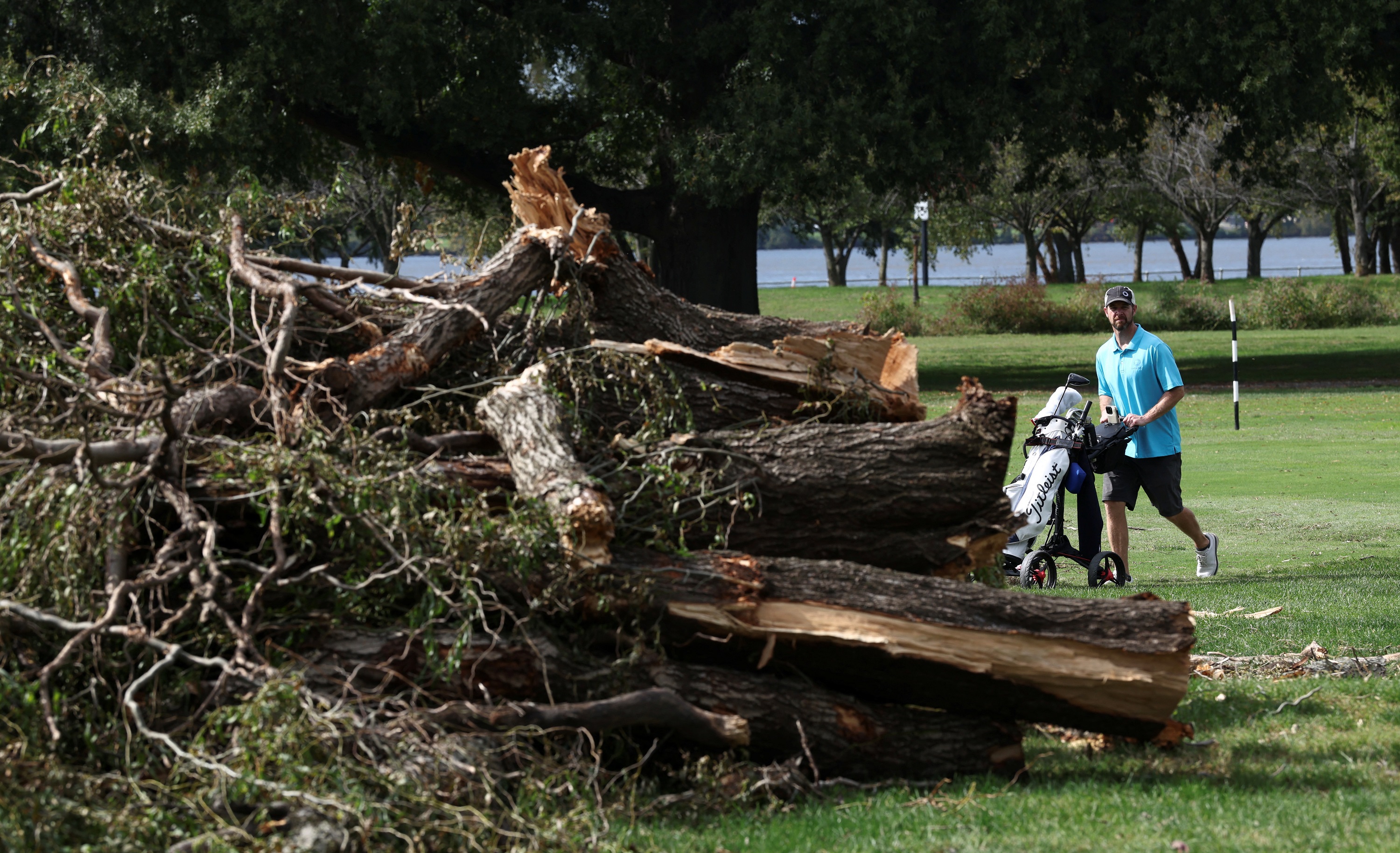
President Donald Trump has set November 15 as the planned start date for a major renovation of East Potomac Golf Links in Washington, D.C., with the facility expected to remain closed for approximately 15 months. The announcement places the administration's redevelopment ambitions in direct tension with an ongoing federal court dispute over construction procedures, environmental protection and the preservation of a historic public recreational site.
The project is part of Trump's broader effort to reshape prominent locations across the U.S. capital. Yet the golf course has become a particularly contentious undertaking because its future involves more than the design of a sporting facility. Decisions about the site affect public access, the management of federally controlled land, the environmental character of the park and the government's obligation to comply with judicial orders.
A New Timetable Amid an Ongoing Legal Dispute
The November 15 date marks another revision to the administration's schedule. Trump had previously indicated that renovation work would begin in September, but the project has since become the focus of litigation brought by the DC Preservation League. The organization filed suit in February, arguing that the proposed intervention could violate environmental protections and cause irreversible damage to a site of historical significance.
Federal District Judge Ana Reyes has ruled that the government must provide advance notice before undertaking substantive construction work at the course. More recently, she ordered a halt to further tree removal, following the clearance of approximately 500 trees in early October.
The administration has argued that the tree removal was intended to improve park safety and restore the site's original design under a plan dating to 2019, before Trump's current redevelopment ambitions. The judge, however, ordered the removals to stop, adding a significant legal constraint to the project's implementation.
The administration's October 9 court filing described the proposed renovation as being at an early, conceptual stage and argued that the litigation was premature. The extensive tree removal the following day intensified scrutiny of the government's actions and the sequence in which project decisions were being implemented.
On October 16, the government sought Reyes' disqualification, alleging that her conduct demonstrated bias against the administration. That request adds another procedural dimension to a dispute that already involves the scope of permissible construction and the government's compliance with existing court directives.
The White House had not immediately clarified whether Trump's latest announcement was consistent with the judge's orders. Accordingly, the announced November date should be understood as the administration's stated timetable, not confirmation that all planned work has received judicial clearance.
Redevelopment Strategy and the Future of a Public Asset
The proposed transformation aims to elevate East Potomac Golf Links into a championship-level destination capable of attracting major golf competitions. Trump has identified the renovation as part of his broader vision for changing the appearance and function of prominent Washington landmarks.
The strategic ambition is clear: replace or substantially upgrade an existing public facility with a more competitive course and improved amenities. Such a transformation could increase the site's profile and create opportunities to attract visitors beyond its regular users. But a championship-oriented development also raises questions about how the facility's public purpose will be preserved.
East Potomac Golf Links is situated in a park used for a variety of recreational activities. Its importance therefore extends beyond golfers to residents and visitors who use the surrounding open space. Any redesign that changes the site's layout, removes established landscape features or restricts access could affect how the public experiences the park.
The project's long-term success will depend partly on whether its operating model can accommodate both ambitions: delivering a facility capable of meeting high-level sporting standards while maintaining meaningful access for the wider community.
Environmental Decisions and Project Governance
The tree removal has become a central issue because it illustrates how environmental decisions can shape the legal and operational risks of large redevelopment projects. Removing hundreds of trees before the dispute has been resolved has intensified questions about the decision-making process, the timing of implementation and the effectiveness of existing oversight mechanisms.
For a project on federally managed land, environmental considerations are not separate from construction planning. They can influence the permitted scope of work, the sequencing of site preparation, the need for additional assessments and the risk of interruptions once contractors and suppliers have been engaged.
A court order requiring advance notification before substantive construction also affects project coordination. Construction schedules depend on the ability to prepare a site, mobilize resources and carry out work in a predictable sequence. Where legal restrictions remain unresolved, those arrangements may need to be revised, creating potential costs and delays.
The dispute consequently raises a broader governance question: how can public authorities pursue substantial improvements to existing infrastructure while ensuring that environmental safeguards, historical preservation obligations and judicial oversight are incorporated into the process from the outset?
Clear documentation, timely disclosure and compliance with court directives can reduce uncertainty. Failure to resolve procedural disputes, by contrast, can complicate implementation even when an administration remains committed to its announced deadline.
The Economic Case for a Championship Course
The commercial rationale for upgrading East Potomac Golf Links rests on its potential to become a more prominent sporting destination. A course capable of meeting the requirements of major tournaments could help attract visitors and generate activity for hotels, restaurants, transport providers and other businesses in the Washington area.
However, the prospect of hosting high-profile competitions does not itself establish that the project will deliver a positive economic return. Major tournaments require suitable course conditions, supporting facilities, operational capacity, event arrangements and formal selection by the relevant organizers. Those requirements must be met before the commercial benefits can be treated as a concrete outcome.
The available public information also leaves important financial questions unanswered. A full assessment would require clarity about construction costs, funding sources, future maintenance obligations and the arrangements governing the course's operation. Without those details, the relative cost of the redevelopment and its potential contribution to the local economy cannot be reliably measured.
The length of the planned closure adds another consideration. A 15-month interruption could affect regular users and the activities of businesses that benefit from visitor traffic, although the scale of any economic impact will depend on the availability of alternative facilities and the extent of local demand.
The balance between capital investment and long-term operating costs will therefore be central to evaluating the project's economic merits. A more sophisticated facility may offer new revenue opportunities, but it could also require higher maintenance spending and operating standards.
Institutional Identity, Accessibility and Public Confidence
The proposed renovation also carries implications for the identity of the facility. A public golf course is not simply a venue for competitive sport; it is part of the recreational infrastructure available to the community. The choices made during redevelopment will influence whether the site continues to serve a broad range of users or becomes more closely oriented toward high-profile sporting events.
Public accessibility will depend on practical operating decisions, including fees, booking arrangements, access during tournaments and the availability of surrounding park facilities. These details will help determine whether the renovated course remains a community resource or shifts toward a more exclusive model of use.
The controversy also places the administration's broader redevelopment agenda under scrutiny. When a government project is associated with a prominent political figure, questions about public benefit, transparency and the use of government-controlled assets can become inseparable from the project's physical design.
For the golf course, institutional credibility will depend not only on the quality of the completed facility but also on how the administration handles legal obligations, environmental concerns and public accountability during construction.
What the November Deadline Means
The planned November 15 start date now sits alongside unresolved questions about the scope of permissible work, the court's restrictions and the government's request to disqualify the presiding judge. These issues may affect the sequence and timing of the renovation, even as the administration continues to present November as its intended starting point.
The course is expected to reopen after approximately 15 months, but that timetable remains subject to the practical and legal conditions governing the project. The administration must also establish how the redesigned facility will be financed, managed and made available to the public.
The case has significance beyond golf. It highlights the challenges of redeveloping public infrastructure when environmental protection, historical preservation, executive priorities and judicial oversight intersect. The outcome will help determine whether the project can proceed within the legal framework while delivering the promised improvements.
For now, the renovation remains a proposed transformation whose execution depends on more than a construction date. Its future will be shaped by the court proceedings, the administration's compliance with applicable orders and the financial and operational decisions that ultimately define the course's role in Washington.
News You Should See
P&G Raises Fiscal 2027 Cost Warning as Oil and Freight Expenses Threaten Profits
Chemical Tank Leak in Toledo Triggers Evacuations and Industrial Disruptions
Judge Sets December 11 Deadline for Trump Deposition in BBC Defamation Case
Iowa Senate Race Tests How Far Republicans Can Separate Themselves From Trump
California State Workers Strike Over Pay, Healthcare and Return-to-Office Rules
Streaming’s October Showdown: How Disney, Netflix and Major Entertainment Brands Compete for Audiences
Latest News
Procter & Gamble expects commodity, energy and transportation costs to reduce fiscal 2027 profit by $1.4 billion. Quarterly sales rose 4% to $23.28 billion, beating analyst expectations.
A ruptured chemical tank in Toledo, Ohio, prompted evacuations, school closures and an industrial shutdown. Authorities have reduced the restricted zone as the release slows and cleanup preparations continue.
A federal judge has ordered Donald Trump to give a deposition by December 11, 2026, in his $10 billion lawsuit against the BBC, with possible sanctions for noncompliance as the discovery deadline approaches.
Iowa’s 2026 Senate race pits Republican Ashley Hinson, balancing Trump support with economic concerns, against Democrat Josh Turek, who emphasizes bipartisanship amid rising campaign spending.
Thousands of California state workers struck on October 21 over a proposed three-year pay increase, healthcare costs and a four-day office attendance requirement as contract negotiations continued.
October 2026 brings major entertainment releases across Disney+, Netflix, HBO Max, Hulu, Prime Video and Peacock. Explore how familiar franchises, exclusive programming, new music and video games shape competition for streaming audiences.
Saudia advises travelers to book flights through Al Qassim Airport for Riyadh connections, offering free hourly shuttle buses in both directions until further notice.
An AP-NORC poll shows Democratic confidence in accurate vote counting falling to 55%, while Republican confidence rises to 38%, highlighting election integrity concerns ahead of the 2026 US midterms.
Donald Trump campaigns in North Carolina ahead of the November 2026 midterms as low approval ratings, rising fuel costs, Democratic early-voting gains and funding disparities challenge Republican efforts to retain control of Congress.