U.S. Lawmakers Warn of China’s Control Over Critical Minerals
Congress urges action to reduce dependence on Chinese minerals

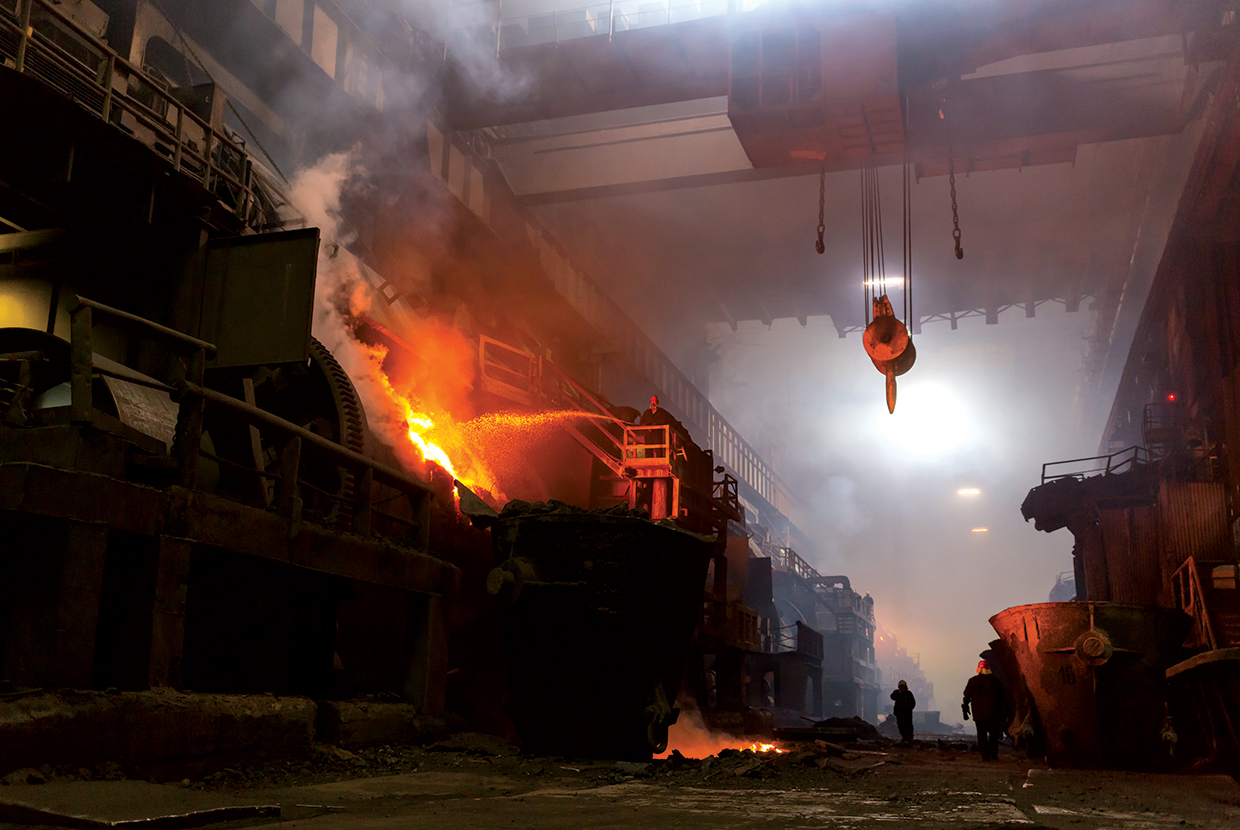
A new congressional report warns that China’s control over the critical minerals trade gives Beijing significant leverage over the U.S. economy and military supply chain, calling for urgent national measures to counter predatory pricing and market domination. According to the House Select Committee on China, China’s manipulation of global mineral prices poses a serious threat to U.S. economic and national security. Lawmakers said Beijing’s pricing policies and control of the rare-earth supply chain amount to what Rep. John Moolenaar described as “a loaded gun pointed at our economy.”
Moolenaar emphasized that from cell phones to fighter jets, Americans rely on minerals that China manipulates for its own interests. He argued that these practices have caused job losses, forced American miners out of business, and jeopardized national security. The report outlines how the Chinese government uses state subsidies, export restrictions, and strict price controls to maintain dominance in critical mineral production and processing. China currently controls about 70 percent of global rare-earth mining, 90 percent of separation and processing, and 93 percent of magnet manufacturing, all of which are vital to industries ranging from renewable energy and electronics to advanced weapon systems.
In October, China’s commerce ministry announced new export restrictions on rare-earth elements essential for semiconductors, drones, wind turbines, and automotive components. The new rules require exporters to obtain licenses for shipping rare-earth minerals and technologies outside China.
The implications for U.S. defense manufacturing are significant. Heat-resistant magnets produced in China are used in fighter jet engines, missile guidance systems, and precision bombs. The report warns that any disruption or price manipulation could severely impact supply chains critical to the U.S. military.
The investigation found that Beijing has invested tens of billions of dollars in global mining operations, often through zero-interest loans, to secure foreign mineral assets. The Chinese government reportedly provided $57 billion in aid and subsidized credit to mining projects worldwide, effectively preventing market-based price discovery. The report notes that Chinese law makes it illegal to publish prices that deviate from government positions, giving China the ability to adjust prices to advance strategic objectives.
By controlling both supply and demand, China can act as a swing producer, raising or lowering prices to suit its goals while preventing markets from reflecting true costs. This allows Beijing to use critical minerals as a geopolitical tool while maintaining near-total control of refining and high-purity mineral production.
The report traces China’s dominance back to the early 1990s, citing former leader Deng Xiaoping’s remark that “there is oil in the Middle East, there is rare earth in China.” Lawmakers argue that current leader Xi Jinping has fulfilled that vision through state-directed consolidation of the entire rare-earth value chain.
The committee offered several recommendations to reduce U.S. vulnerability, including creating a federal coordinator to oversee critical minerals policy and financing, accelerating domestic mining and refining permits, offering tax credits and low-cost loans for U.S. mineral and magnet production, establishing a national strategic reserve of critical minerals, and supporting research, workforce development, and innovation in the domestic supply chain.
Rep. Rob Wittman, the committee’s co-leader, stated that critical minerals are essential inputs for countless industries, including defense, energy, and healthcare. He argued that establishing a strategic reserve is necessary to strengthen America’s supply chain and ensure national security. Lawmakers warned that without swift action to rebuild the industrial base and secure independent access to rare-earth resources, China’s market manipulation will continue to threaten American industry and defense readiness.
News You Should See
P&G Raises Fiscal 2027 Cost Warning as Oil and Freight Expenses Threaten Profits
Chemical Tank Leak in Toledo Triggers Evacuations and Industrial Disruptions
Judge Sets December 11 Deadline for Trump Deposition in BBC Defamation Case
Iowa Senate Race Tests How Far Republicans Can Separate Themselves From Trump
California State Workers Strike Over Pay, Healthcare and Return-to-Office Rules
Streaming’s October Showdown: How Disney, Netflix and Major Entertainment Brands Compete for Audiences
Latest News
Procter & Gamble expects commodity, energy and transportation costs to reduce fiscal 2027 profit by $1.4 billion. Quarterly sales rose 4% to $23.28 billion, beating analyst expectations.
A ruptured chemical tank in Toledo, Ohio, prompted evacuations, school closures and an industrial shutdown. Authorities have reduced the restricted zone as the release slows and cleanup preparations continue.
A federal judge has ordered Donald Trump to give a deposition by December 11, 2026, in his $10 billion lawsuit against the BBC, with possible sanctions for noncompliance as the discovery deadline approaches.
Iowa’s 2026 Senate race pits Republican Ashley Hinson, balancing Trump support with economic concerns, against Democrat Josh Turek, who emphasizes bipartisanship amid rising campaign spending.
Thousands of California state workers struck on October 21 over a proposed three-year pay increase, healthcare costs and a four-day office attendance requirement as contract negotiations continued.
October 2026 brings major entertainment releases across Disney+, Netflix, HBO Max, Hulu, Prime Video and Peacock. Explore how familiar franchises, exclusive programming, new music and video games shape competition for streaming audiences.
Saudia advises travelers to book flights through Al Qassim Airport for Riyadh connections, offering free hourly shuttle buses in both directions until further notice.
An AP-NORC poll shows Democratic confidence in accurate vote counting falling to 55%, while Republican confidence rises to 38%, highlighting election integrity concerns ahead of the 2026 US midterms.
Donald Trump campaigns in North Carolina ahead of the November 2026 midterms as low approval ratings, rising fuel costs, Democratic early-voting gains and funding disparities challenge Republican efforts to retain control of Congress.